
Introduction
This project tackles two interrelated ideas “machine” and “making”. How can we design with the machine, and to what extent could we possibly bring it; that is exactly what Matin and Puteri explored over the course of 5 eye-opening weeks. The duo collaborated together for the first time and undertook a series of design experiments ranging from pen plotter, laser cutter, and Arduino where we produced a series of artefacts.
Where the context is to visually express natural phenomena and their impact on the environment, our project focused on the phenomenon of Soil, specifically Bacteria. We shared similar interests in bacteria through its labyrinthine structure & enthralling growth. Scroll down to discover how the duo interpreted the context of Bacteria, extract key findings, and explore ways of communication through teachable machines.
Puteri is a bold and fiery graphic designer with an immense amount of passion for her work. Adding loud and vibrant visuals into her work speaks volume of who she is as a creative individual.
Matin is a graphic designer with a passion for UI interface designs and fun interactivity with Javascript coding.
Bacteria Manipulation
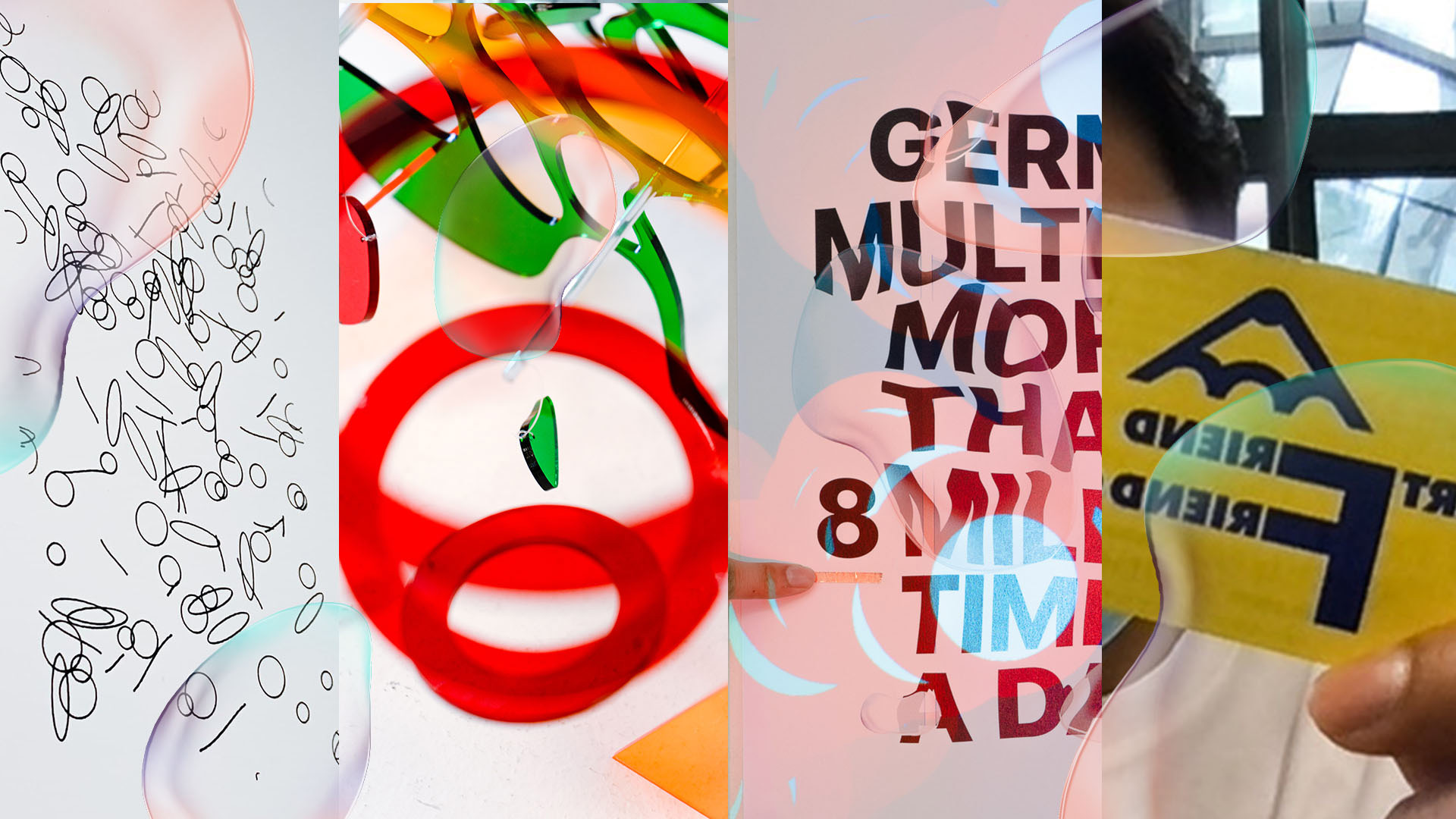
Experiments conducted by Matin and Puteri.
About the Projects
For 5 weeks, we were exposed to a series of machines, and challenged to implement technology into our design process as designers. In our personal opinion as makers of graphics, we rely too much of our work on widely accepted standards and fail to consider the availability of non-contemporary tech interventions.
Each week brought a new set of interventions which we implemented to our best extent. The design process involved learning, understanding and implementing elements of the tech to our designs—be it in its ideation or generation phase. As we progressed, we learnt that the technology can be made to fit our needs should we know how to bend the rules (even if just a little bit).
Explore our journey of 4 experiments below.
Experiment 1
Pen Plotter
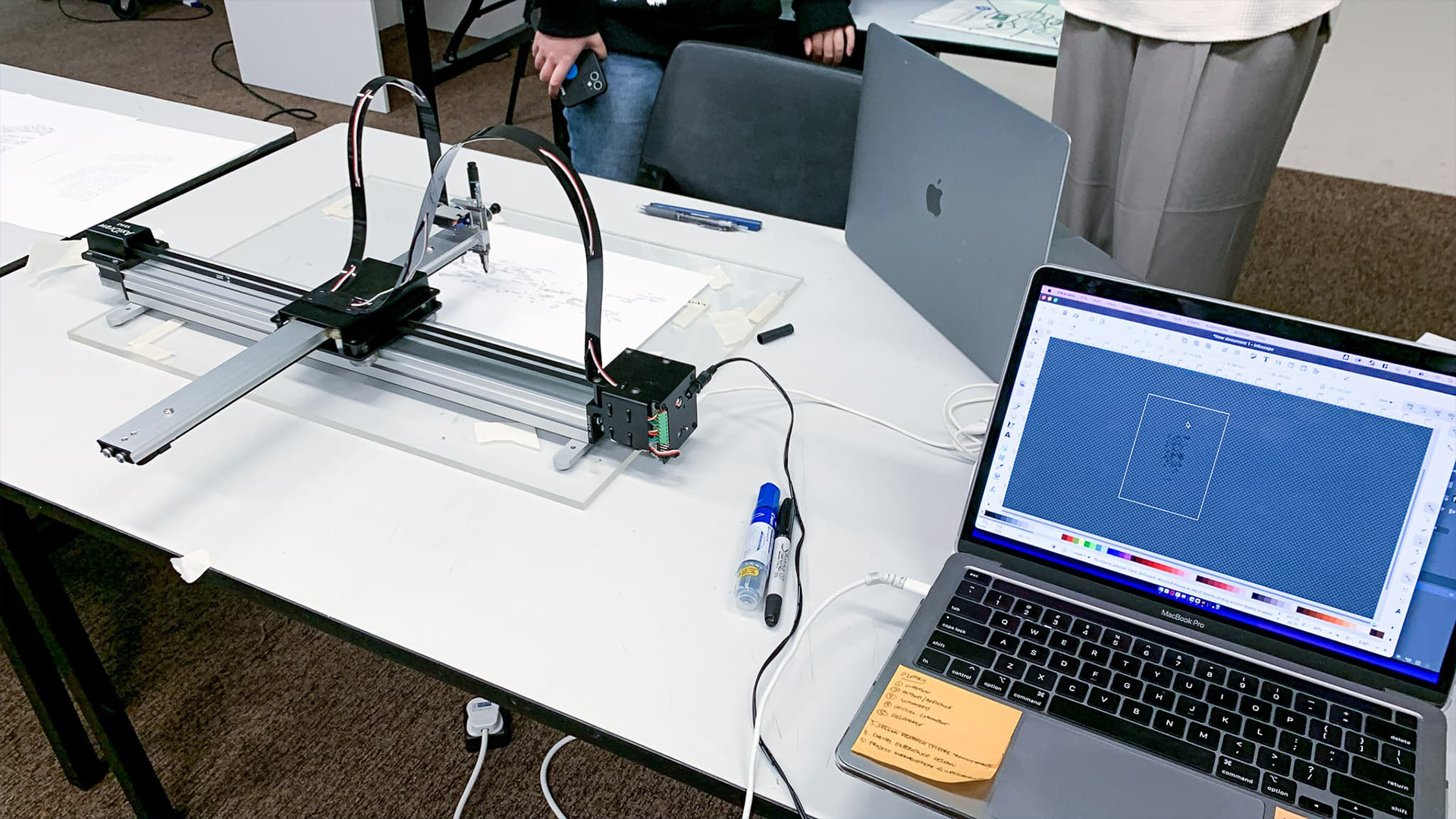
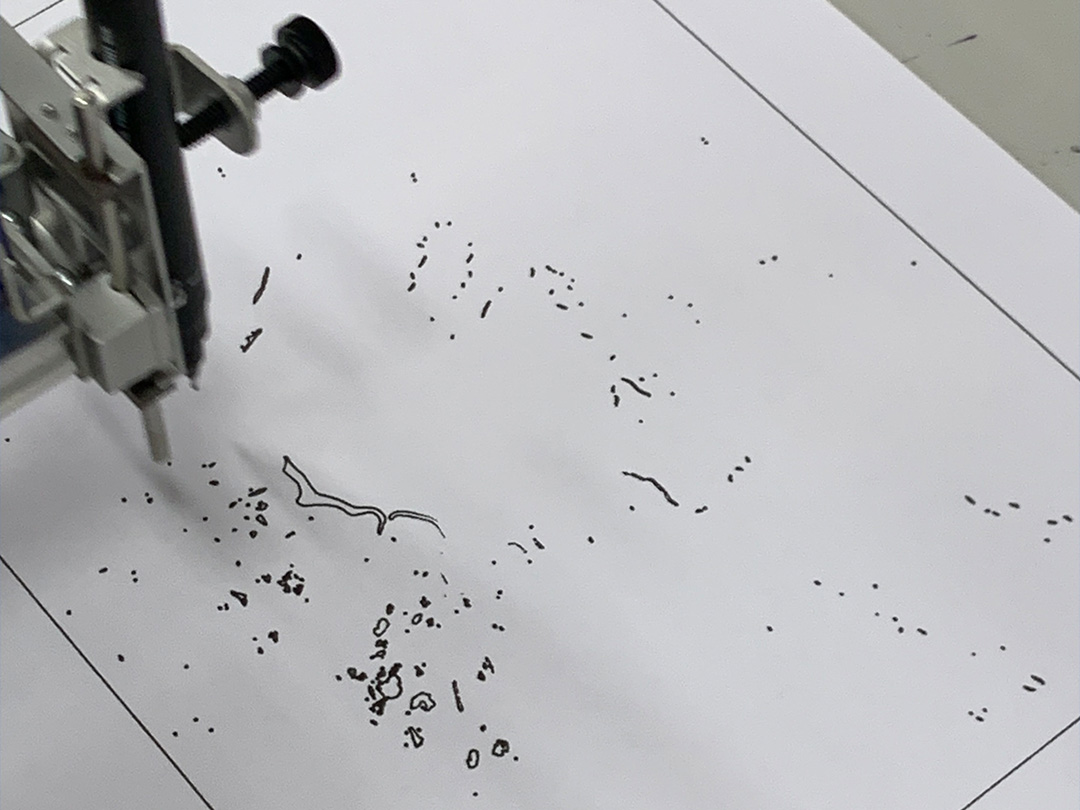
The pen-plotter works as a simple printer with the ability to interchange the choice of writing material. Digital designs can be translated into reality with the help of this 2-axis robot.
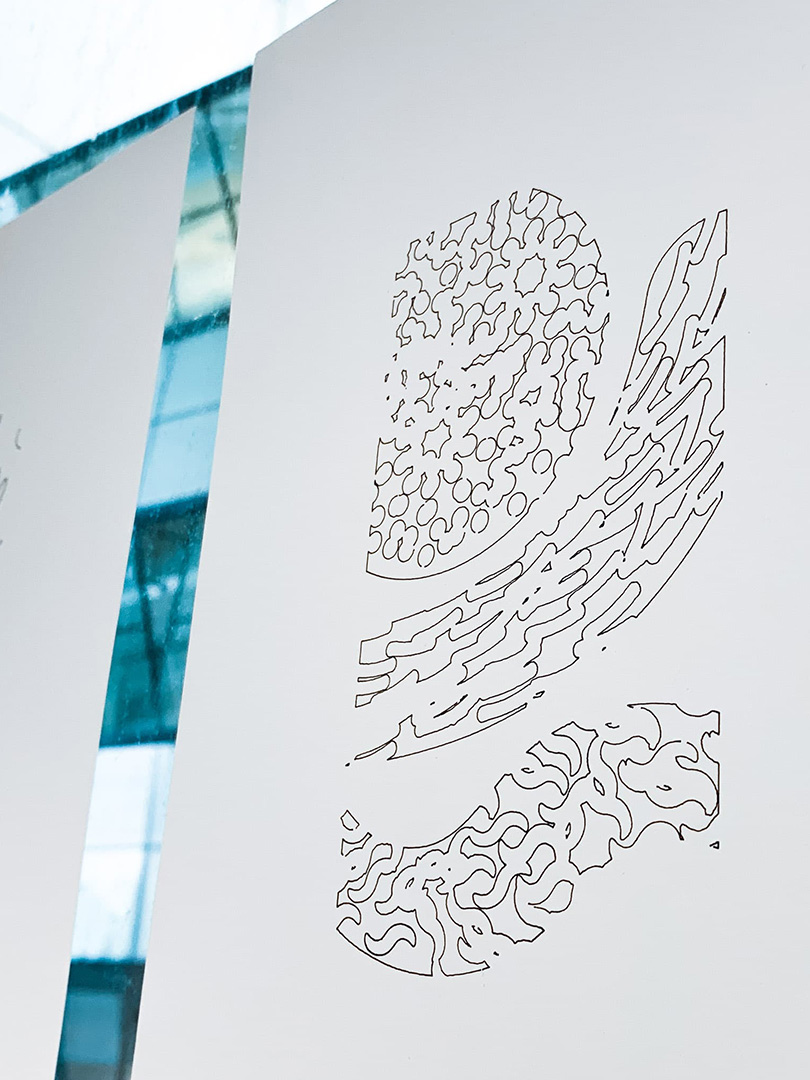
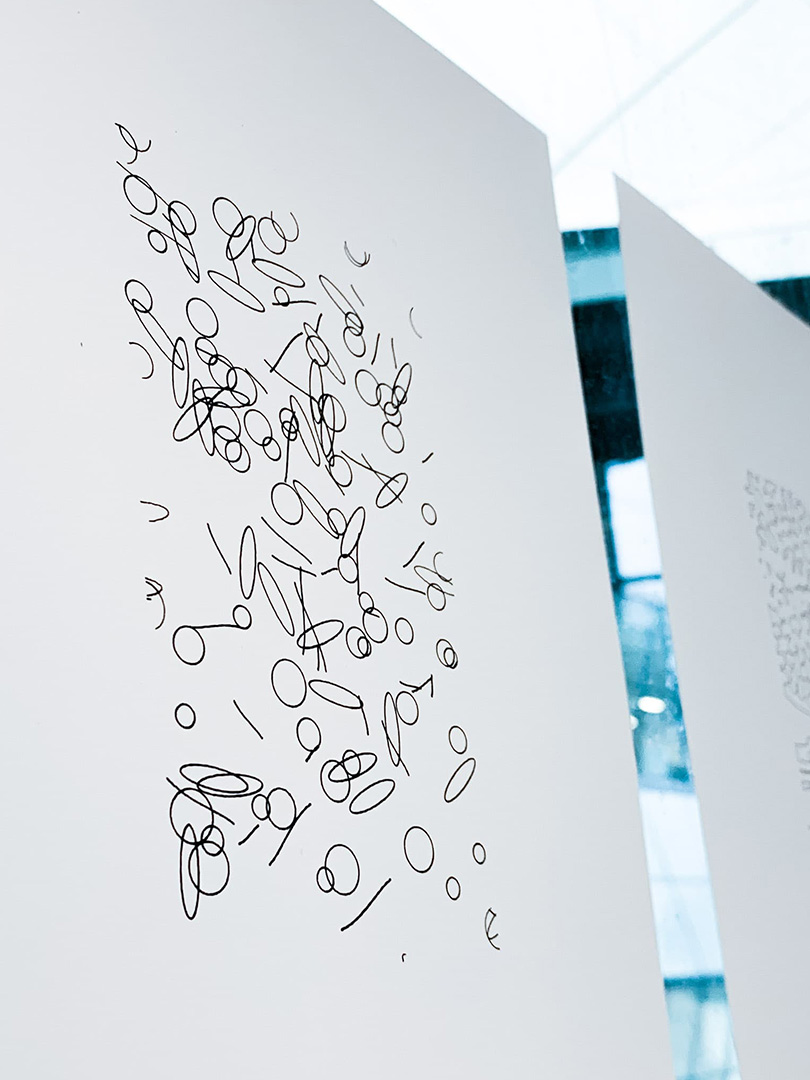
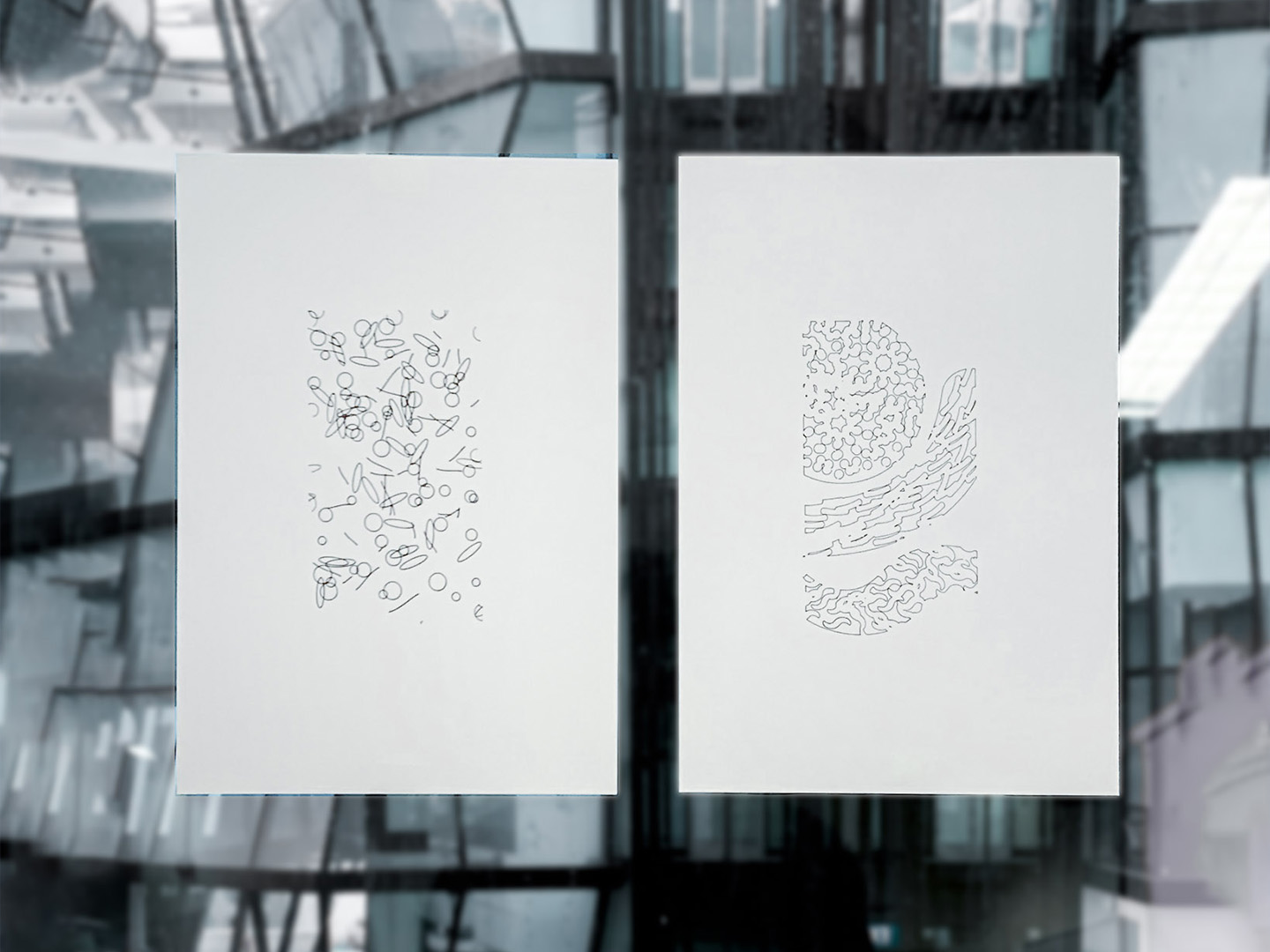
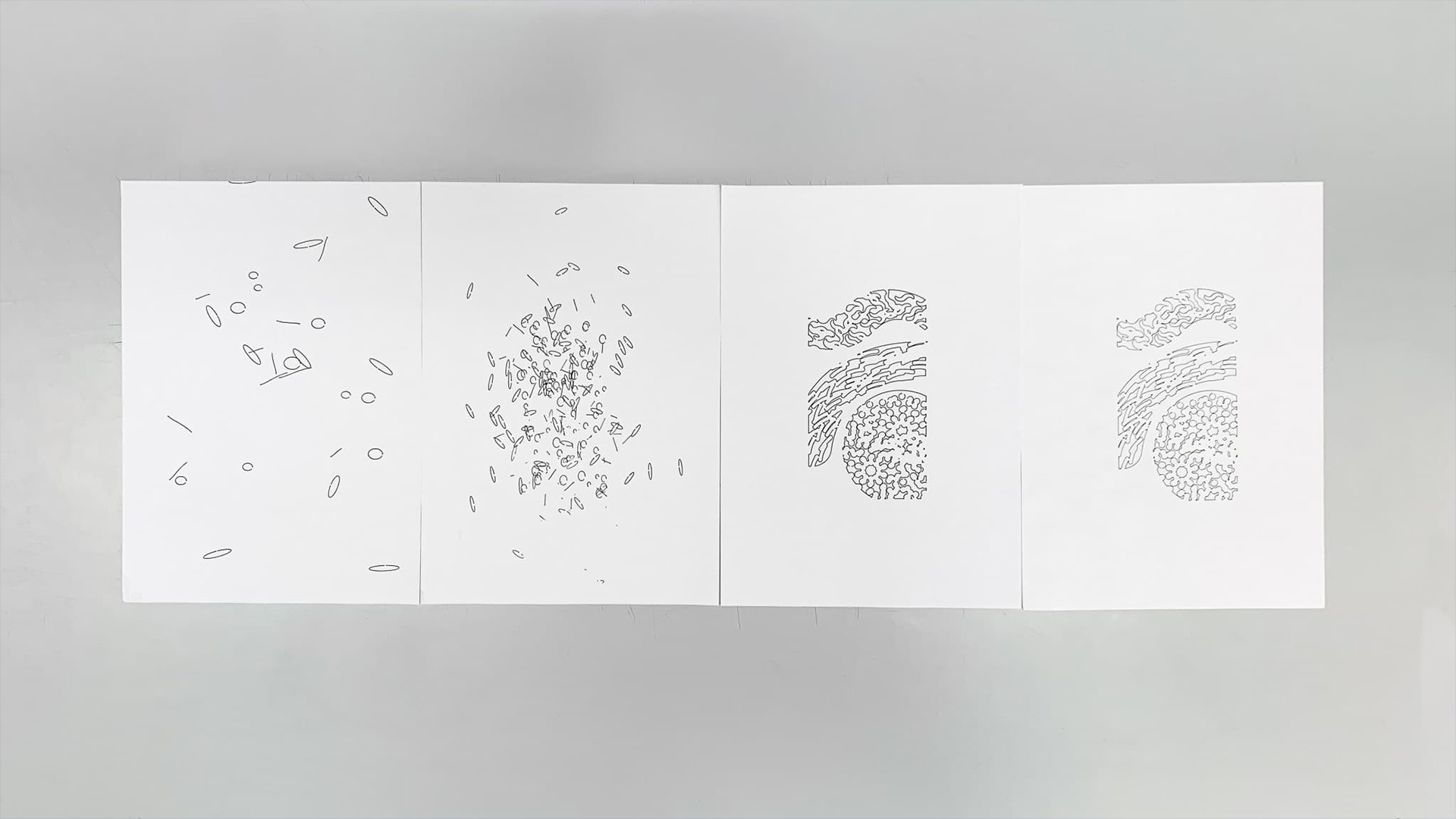
The duo looked to portray the concept of Bacteria using simple silhouettes to represent typical forms such as spiral, rod-like and spherical. On p5js, Matin played on the idea of the random spread of bacteria using the in-built ‘random’ function. This produced a minimal visual representation of Bacteria where no two exports were the same.
On the other hand, Puteri explored the representation of growth through formed structures. Three beautifully fluid shapes made up of small ellipses were done in Adobe Illustrator to represent the intricacies of nature and bacteria.
Reflection
The plotter’s speed is limited due to the size and strength of its motors hence designs would take too long to print if too intricate. As such, we approached the machine sparingly with designs that weren’t too tasking. It’s almost as though we were tasking an elderly calligraphy artist to draw out our works. Some tech empathy right here.
With that said, we feel that we could have revisited the pen plotter with different materials such as water paint and paper to have it dictate the ‘spread of bacteria’ based on the number of times the machine would interpret our design.
Experiment 2
Laser Cutter
The laser cutter expanded the choice of material and dimensional play. By cutting thin wood or acrylic planks, 3D forms of endless intricacies could be created.
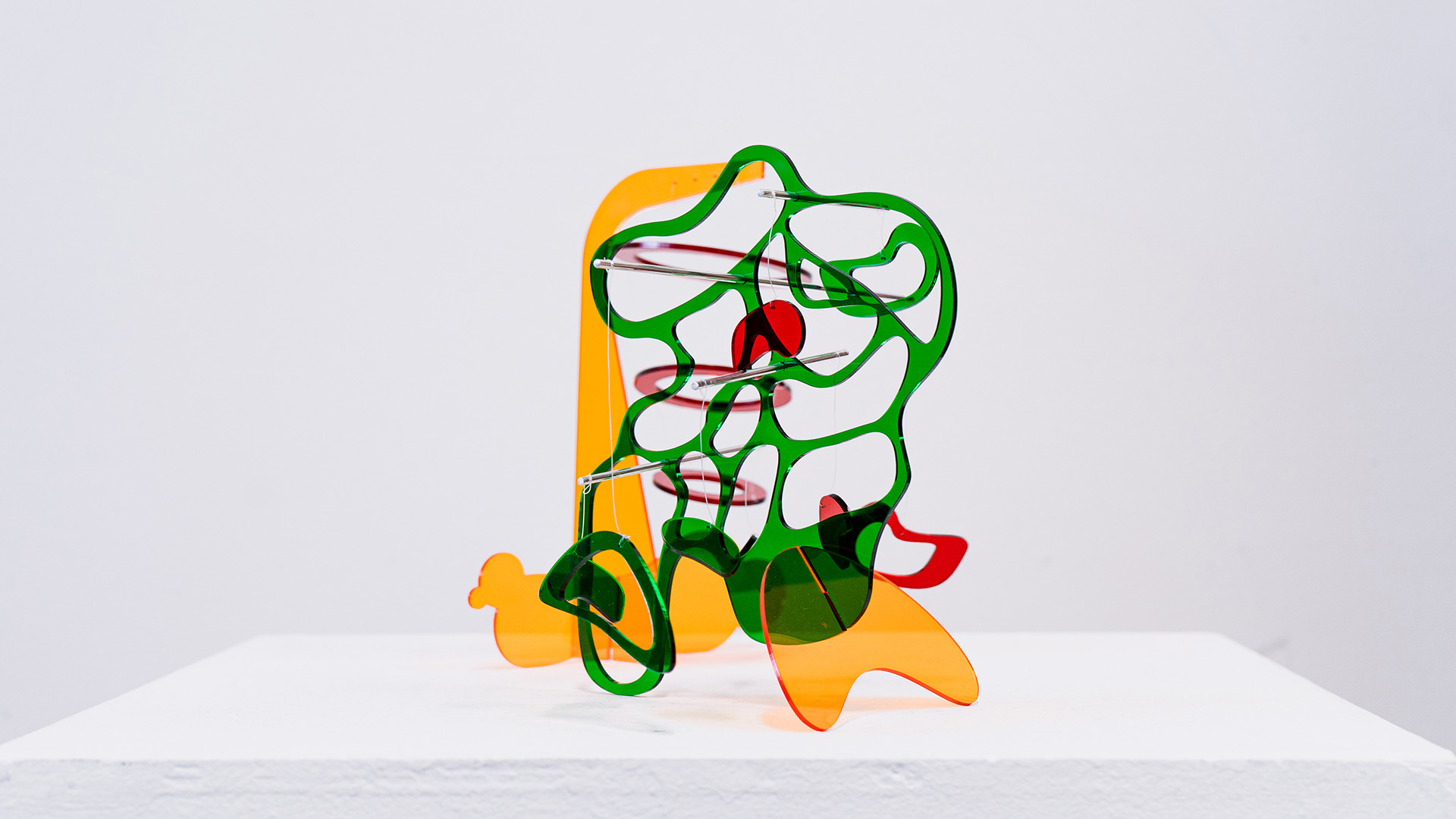
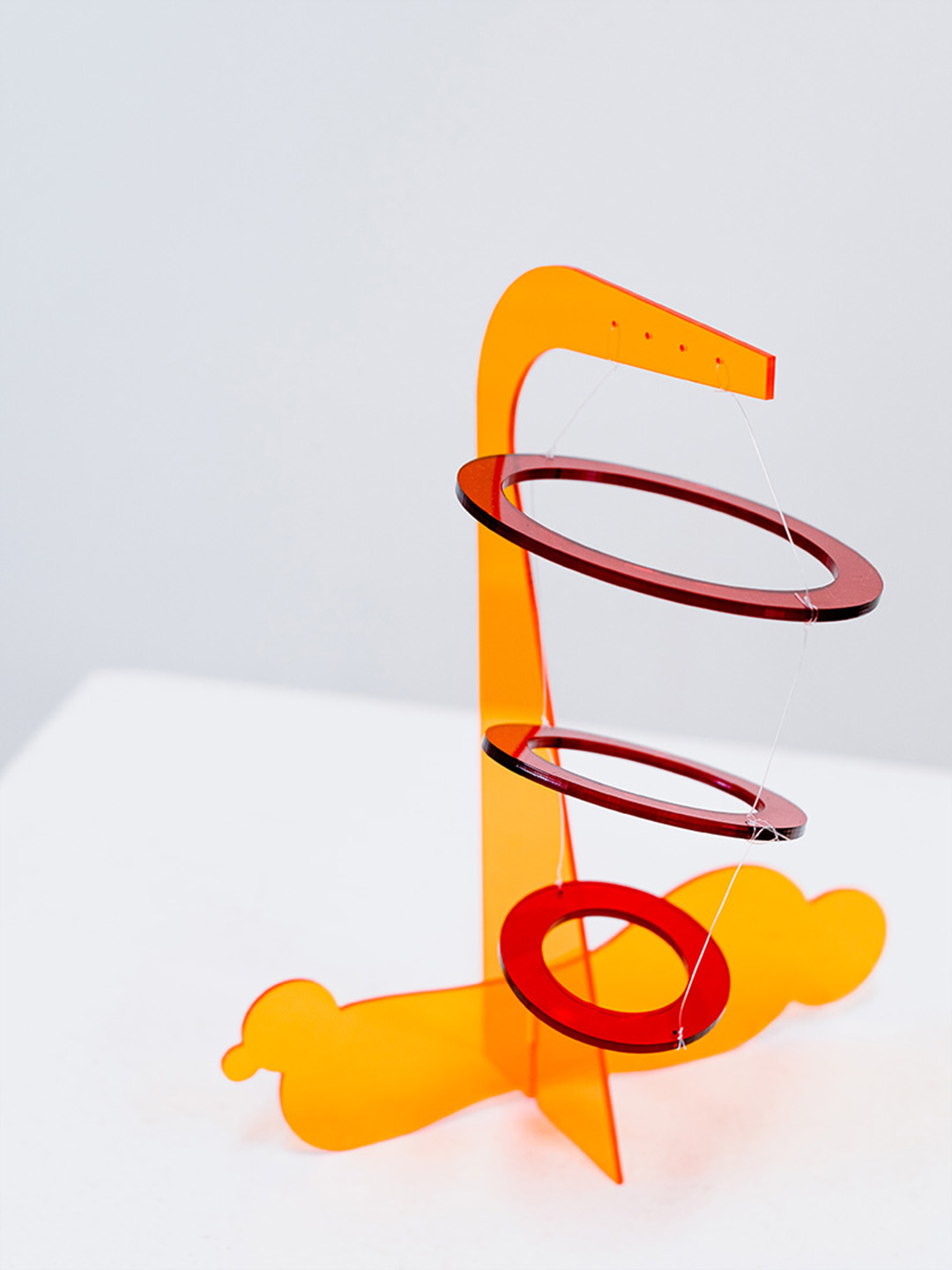
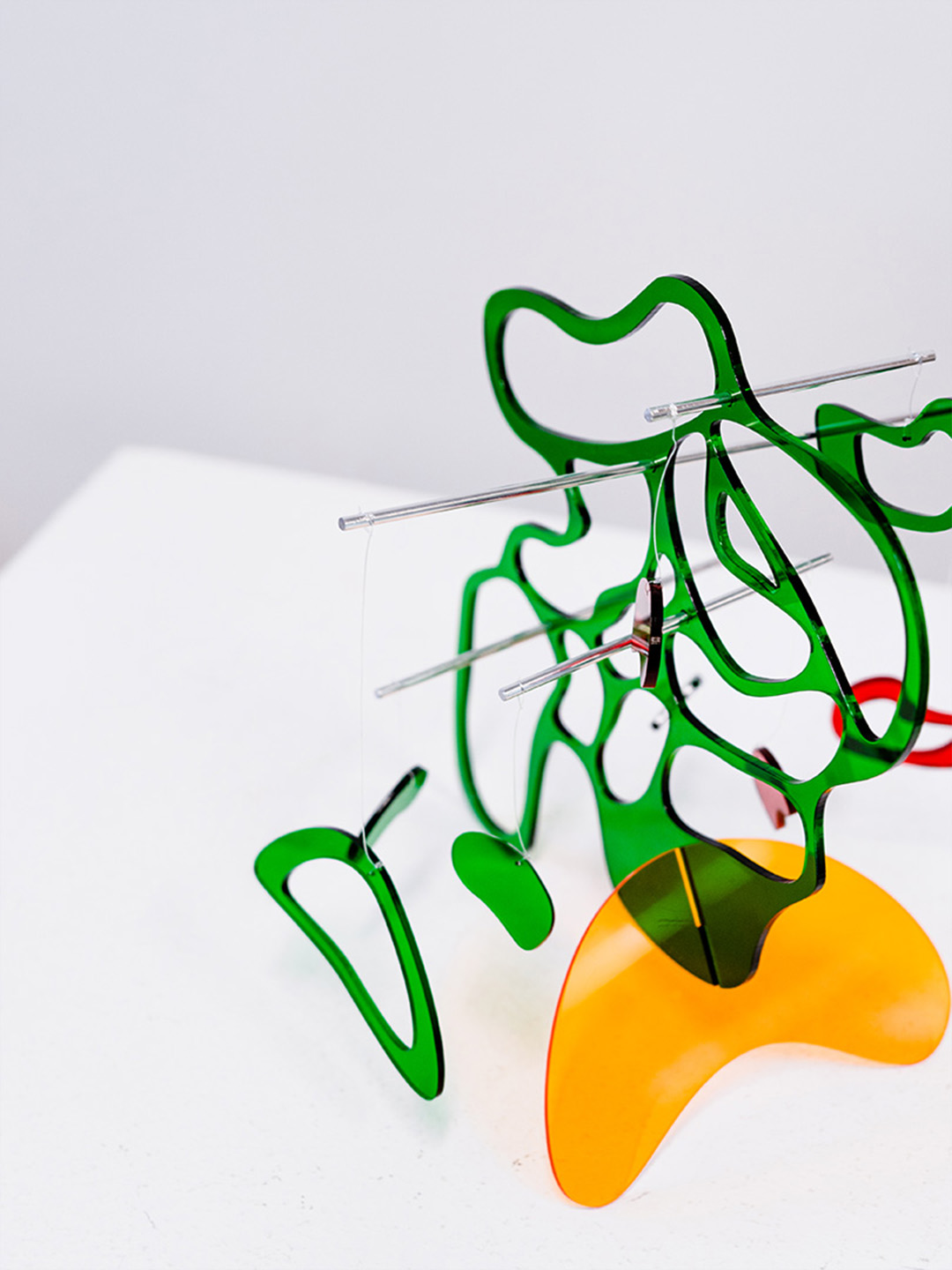
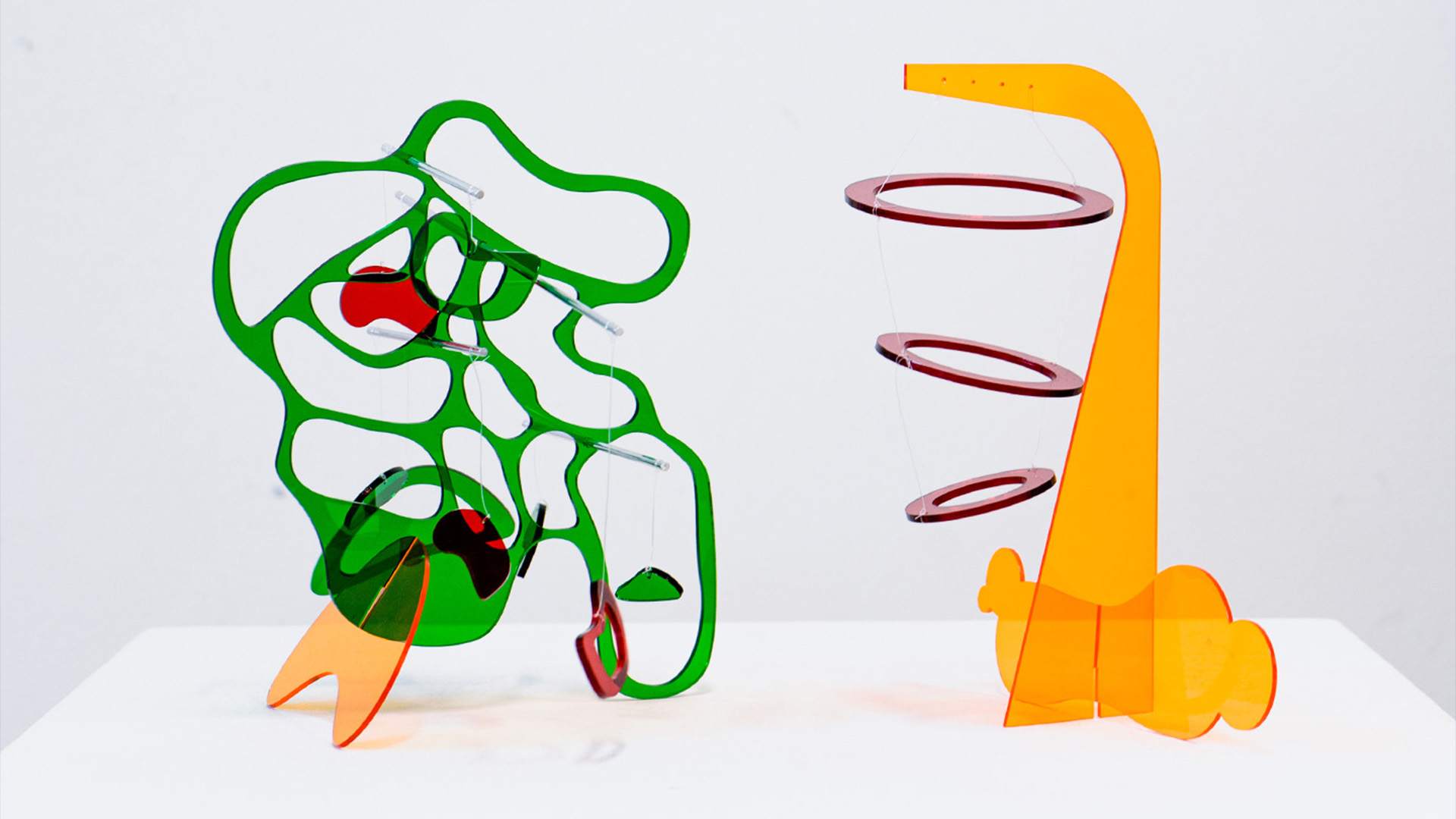
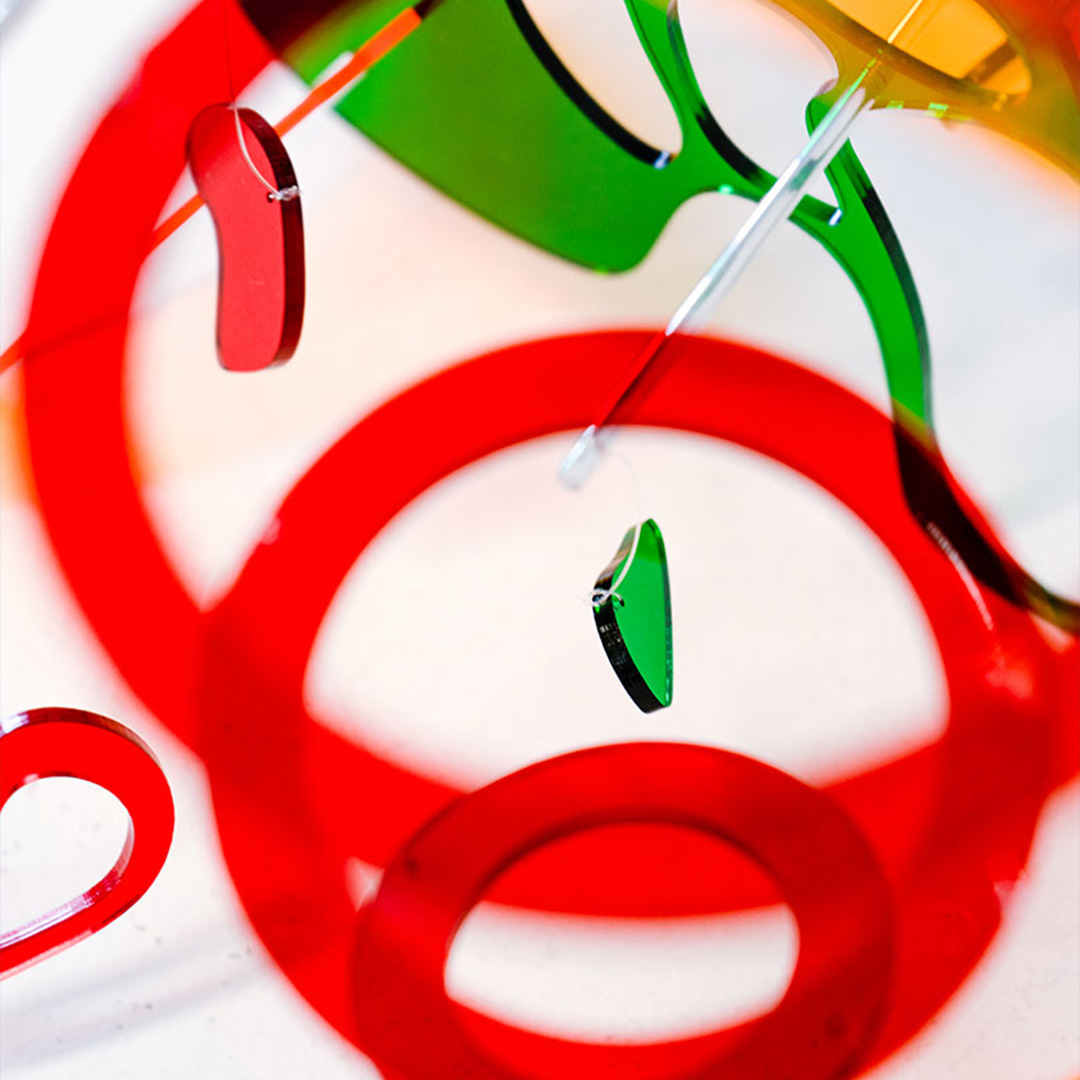
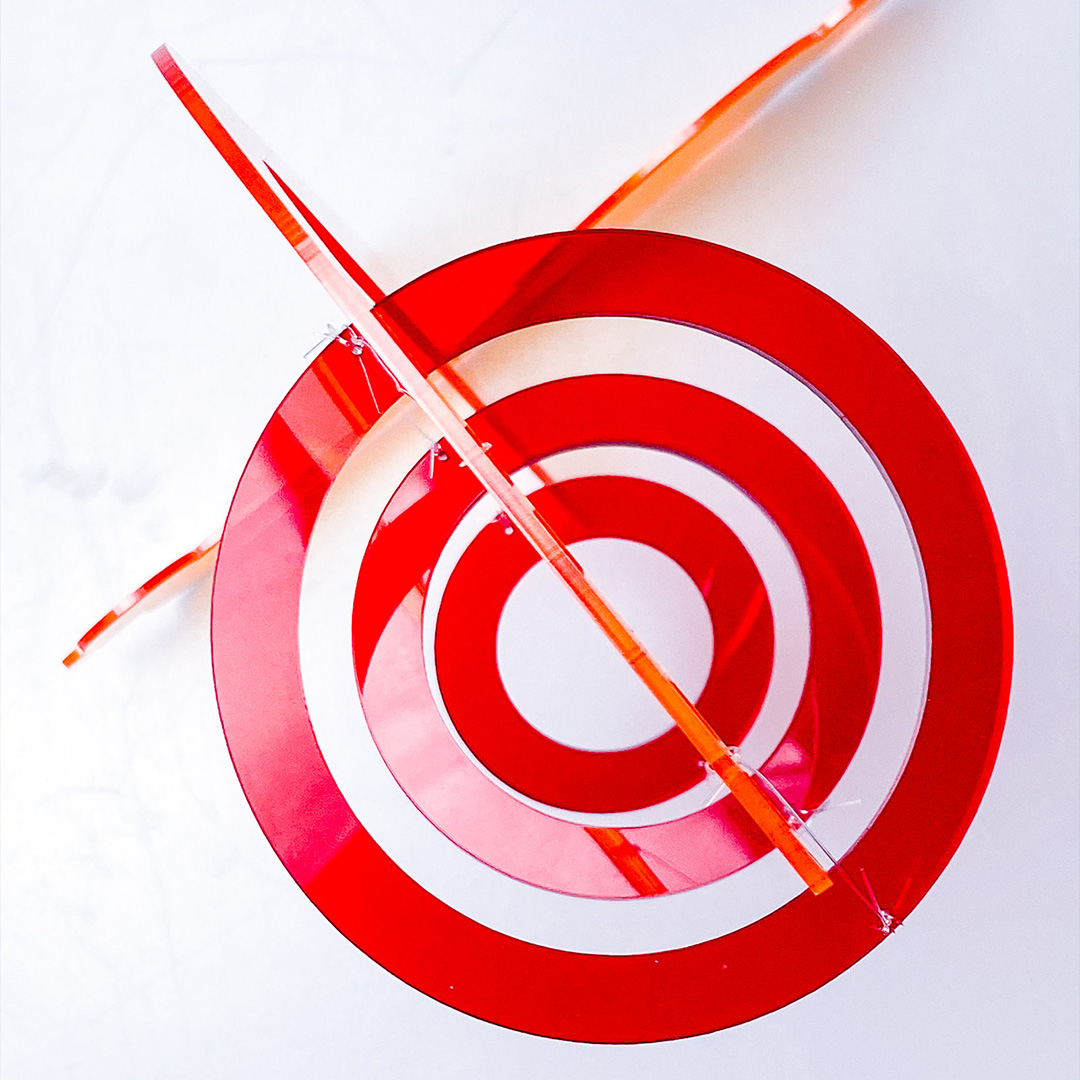
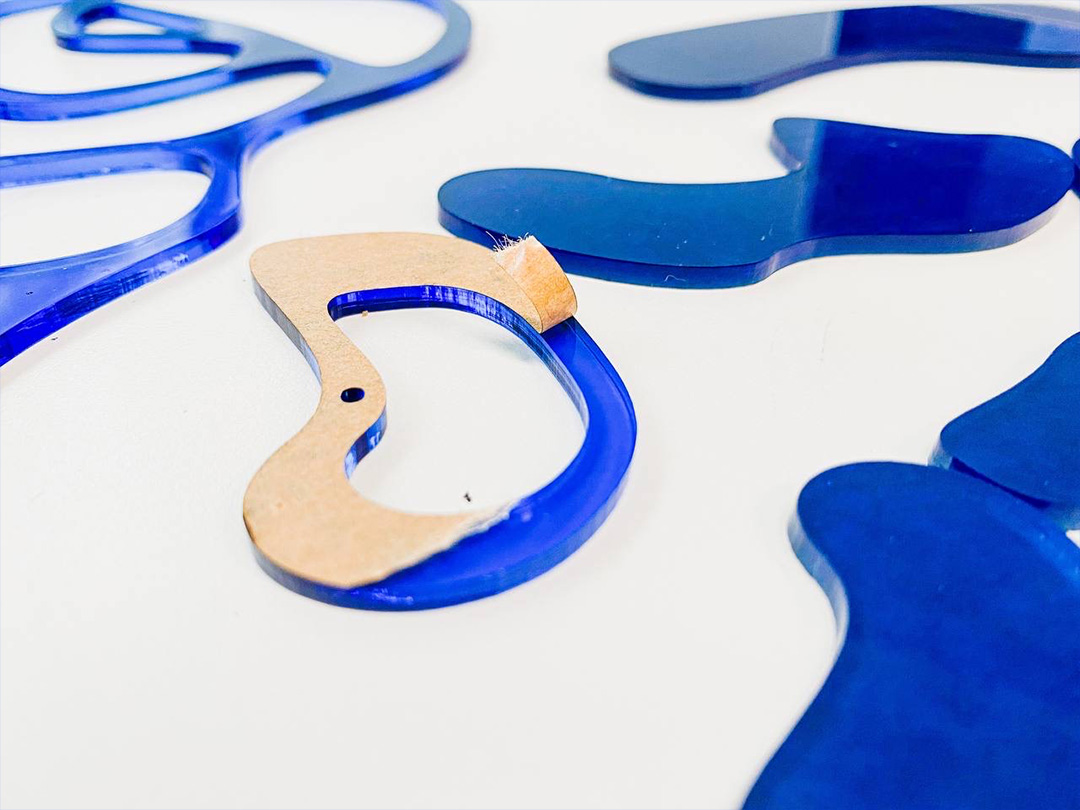
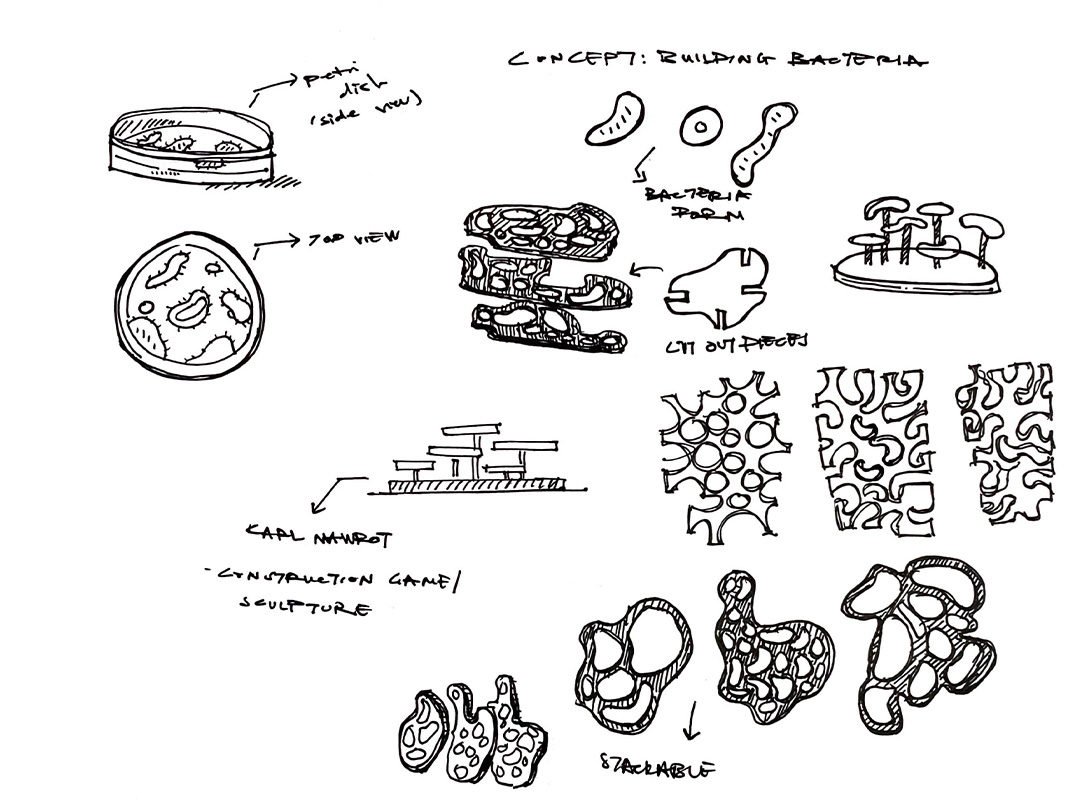
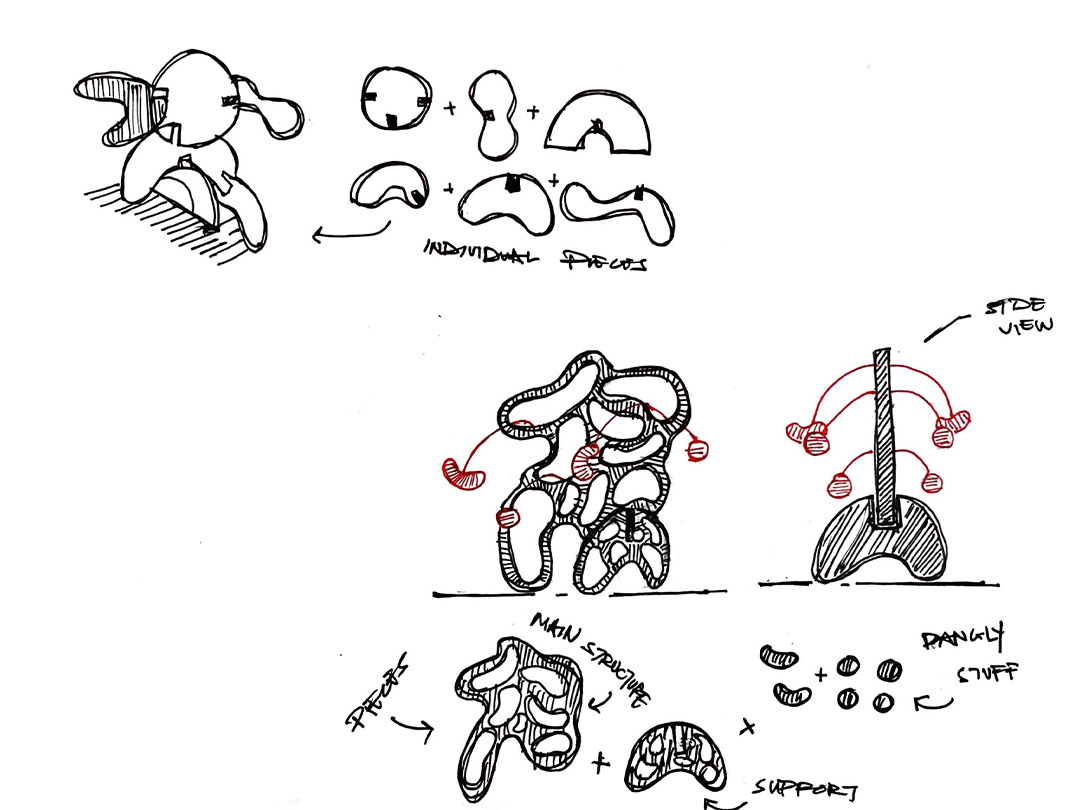
Inspired by the delicate and whimsical nature of mobile sculptures, we sketched out methods to form over-hanging representations of bacteria. Bouncing off our obsessions, Puteri created a mobile with steel armatures that act as extra beams to hang smaller pieces off. The main piece was a slender cellular structure that seemed to ebb and flow into air. Matin’s structure, on the other hand, supported itself with a large overhang. The main display was three rings in reducing diameters.
Reflection
We spent quite a bit of time playing with the laser cutter—maybe because we’ve always worked off a 2D screen, this felt like taking a breath of fresh air. We approached the design of the mobiles to hang off on their own due to the logistics of it. To reduce wastage, the design of each piece was arranged close to one another on the acrylic panel. Having a large base to hang the smaller pieces allowed us to reduce the number of materials used and wasted.
Having everything work together while being made of the same material also has an interesting effect as opposed to hard-knocking malleable materials together to hang the main display. Here, we felt that the structure should be part of the display as well.
Experiment 3
Micro Controller
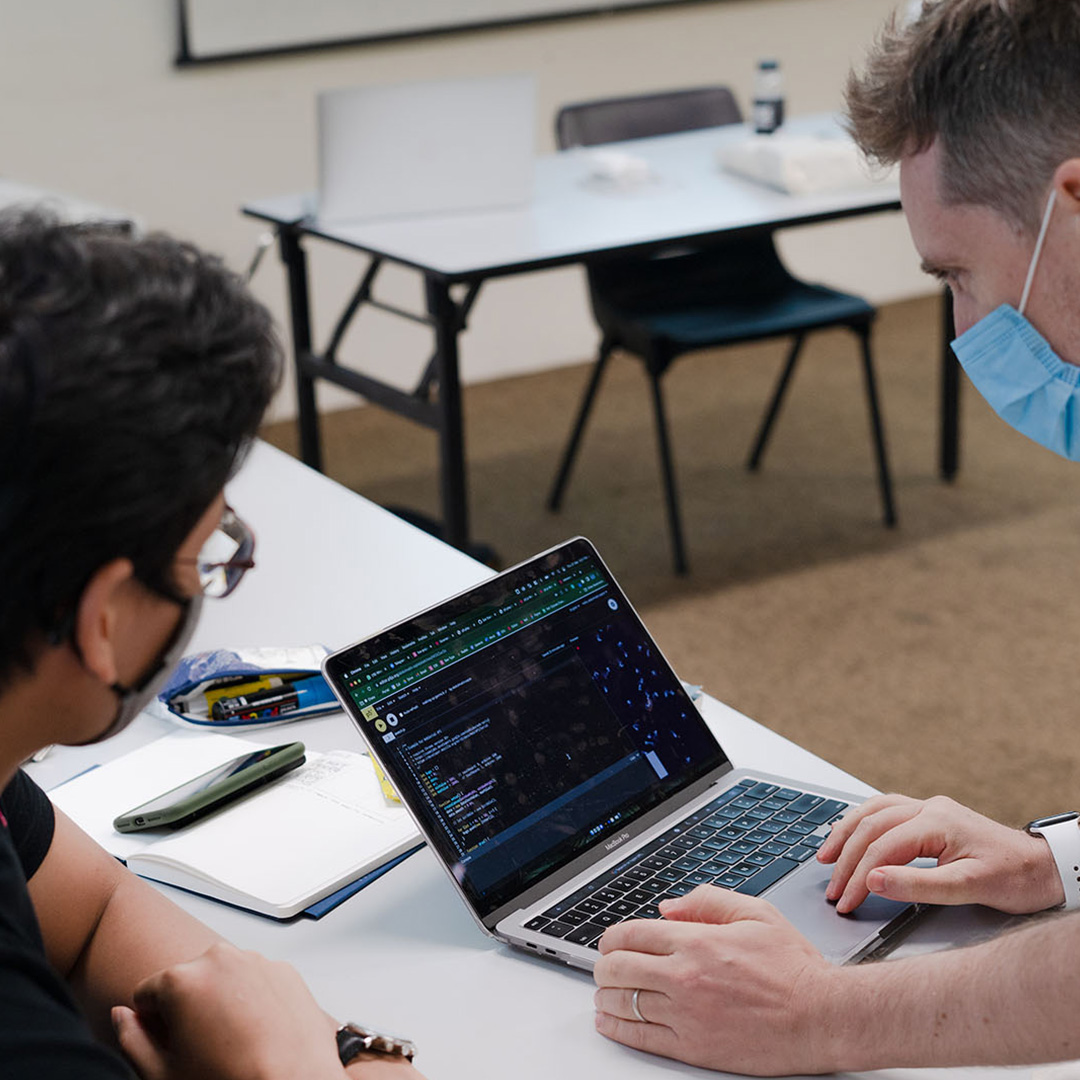
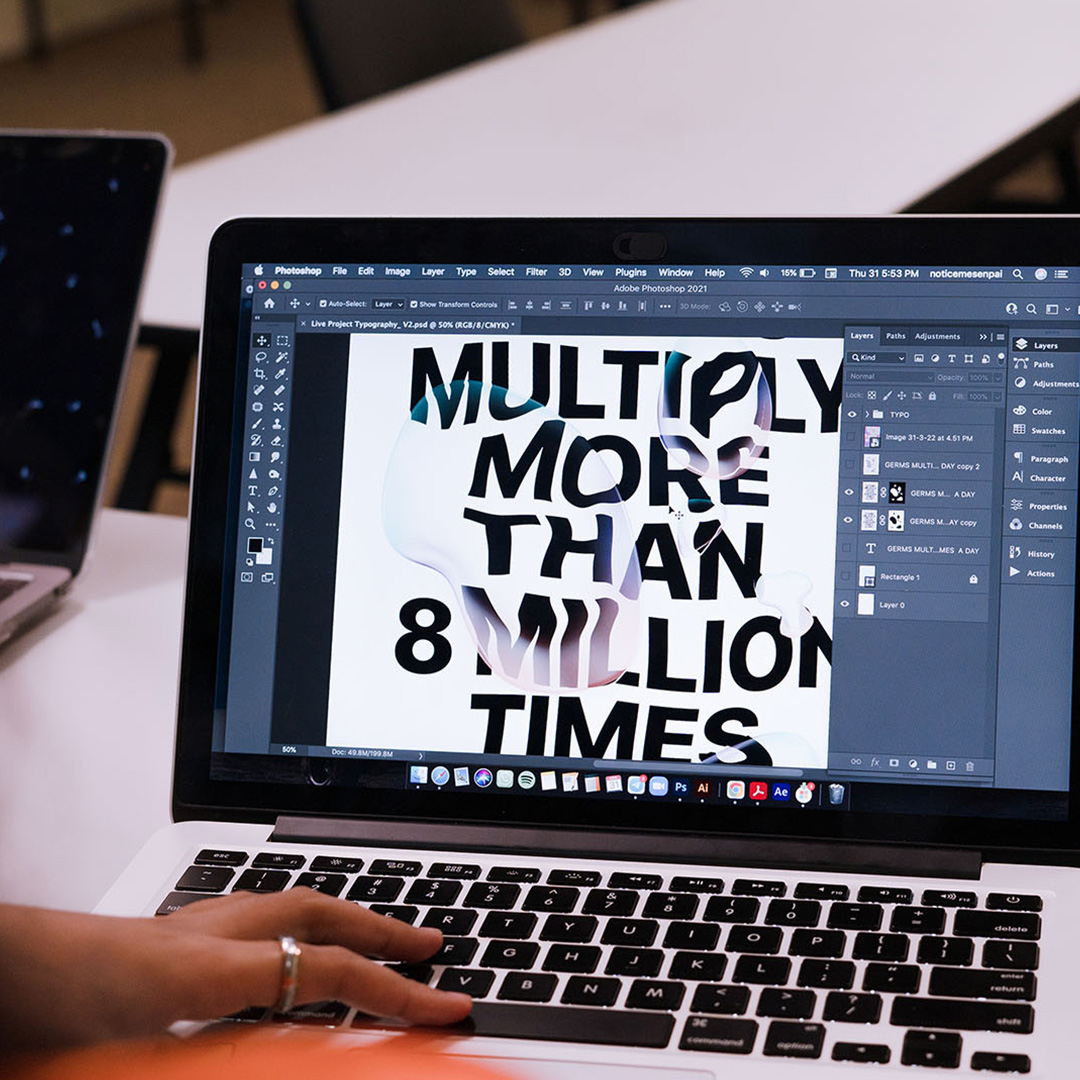
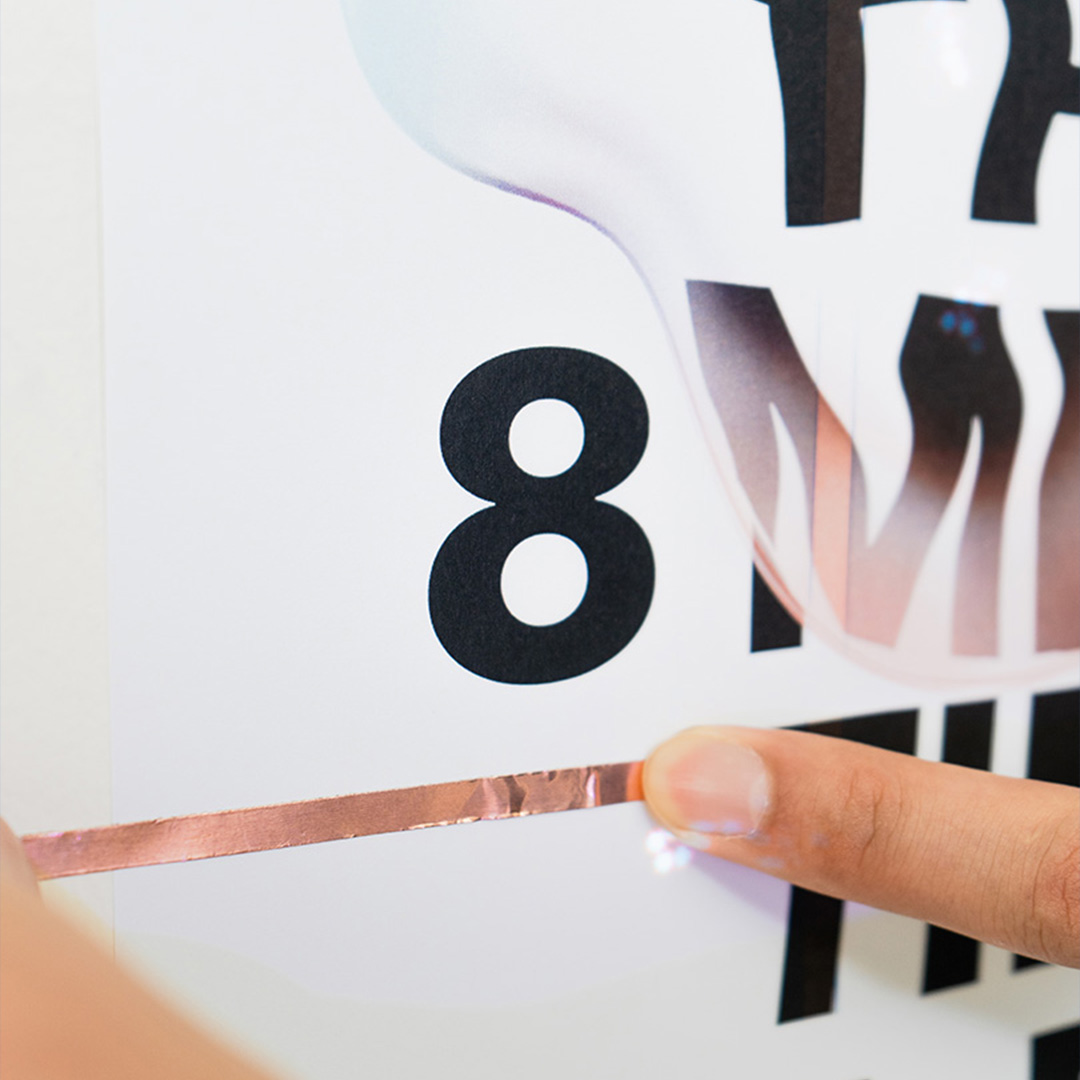
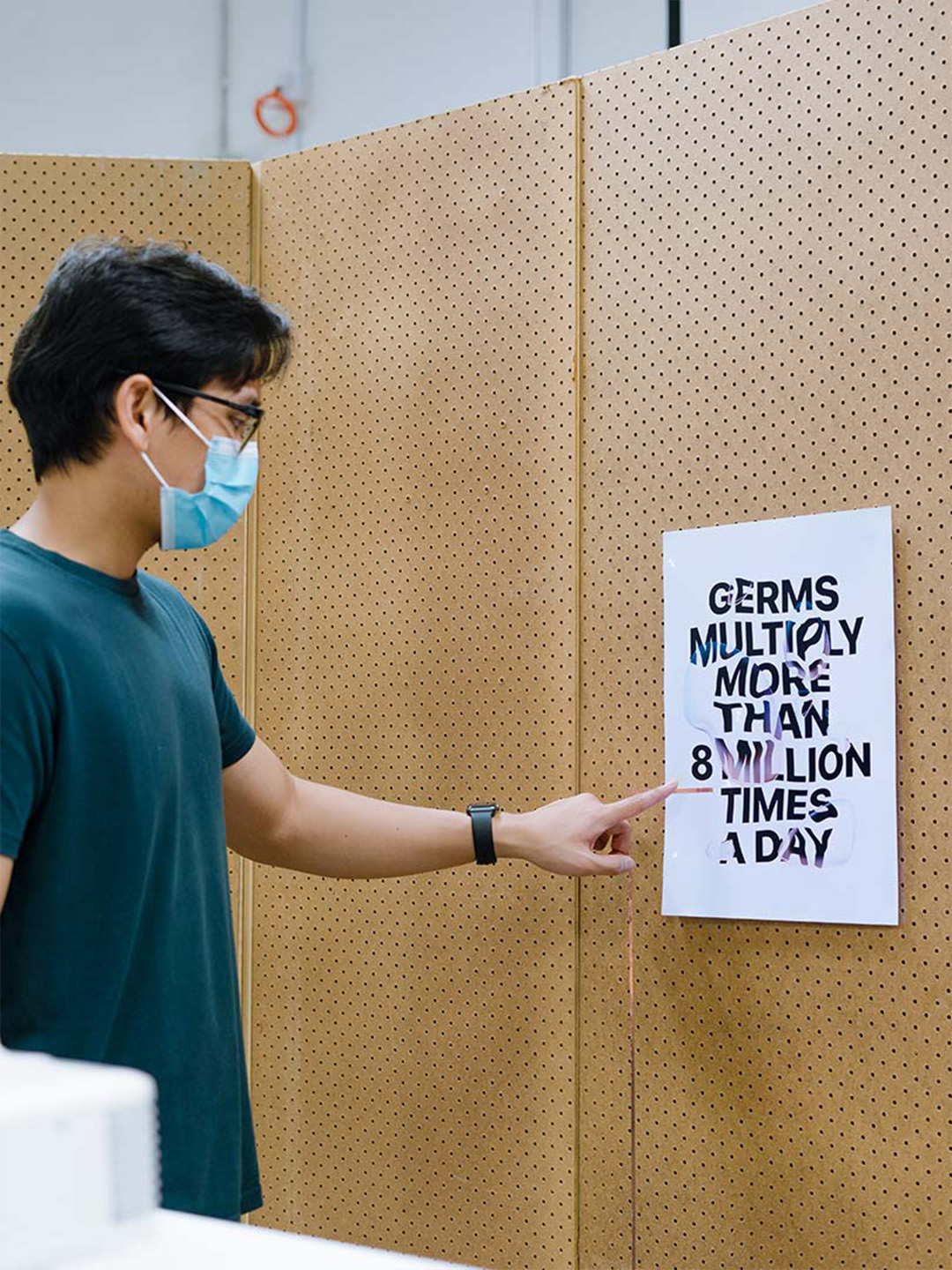
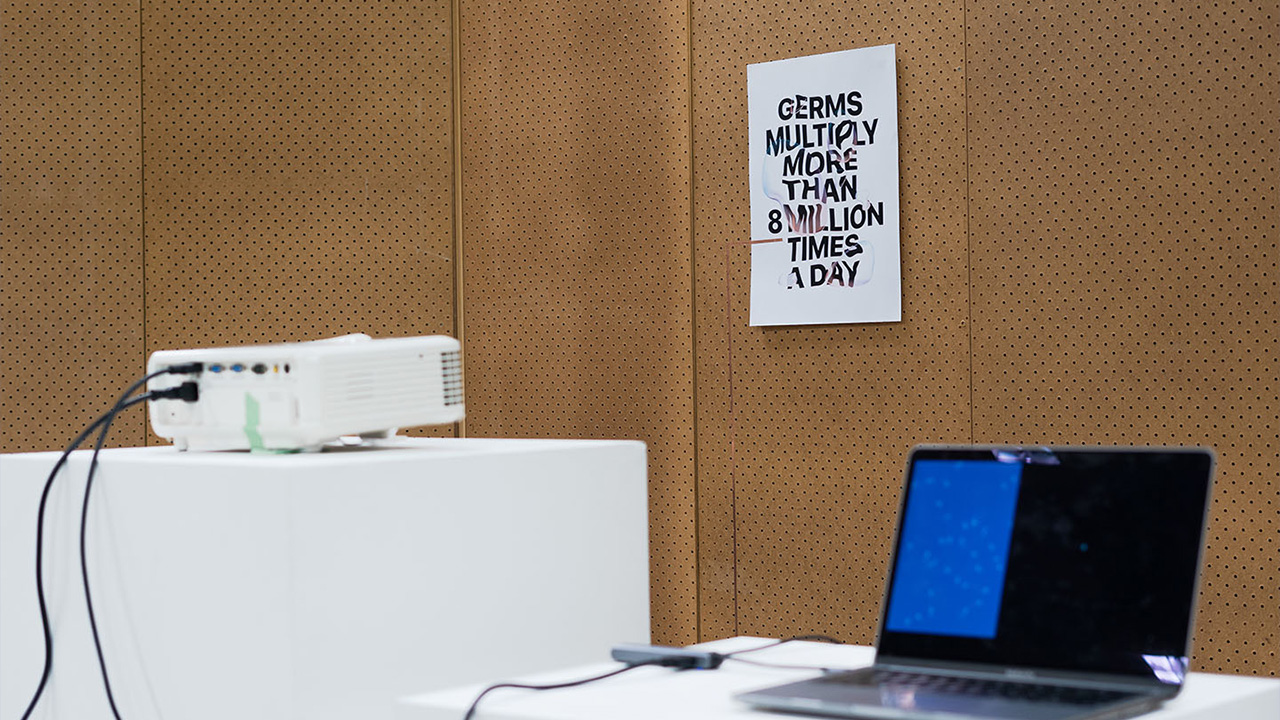
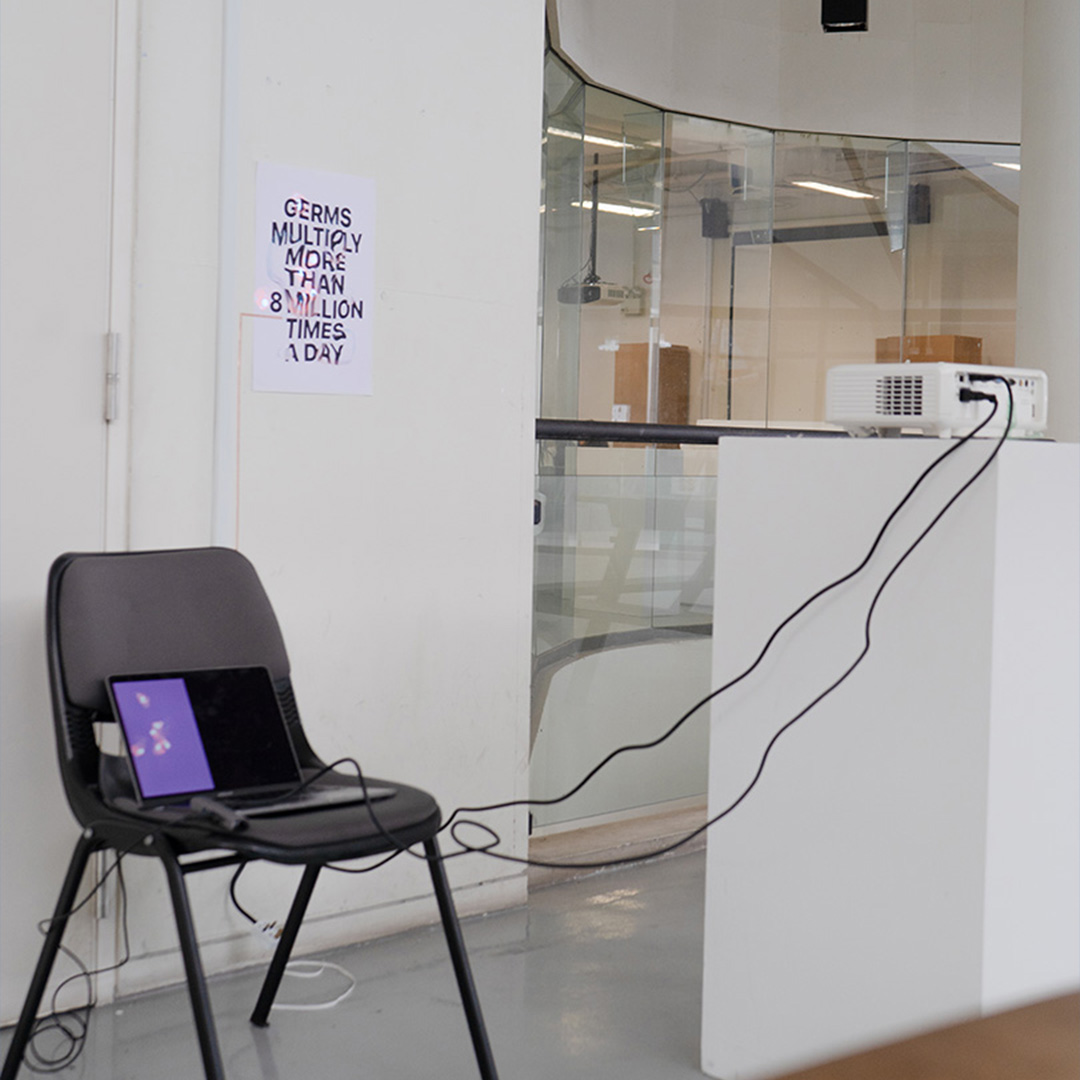
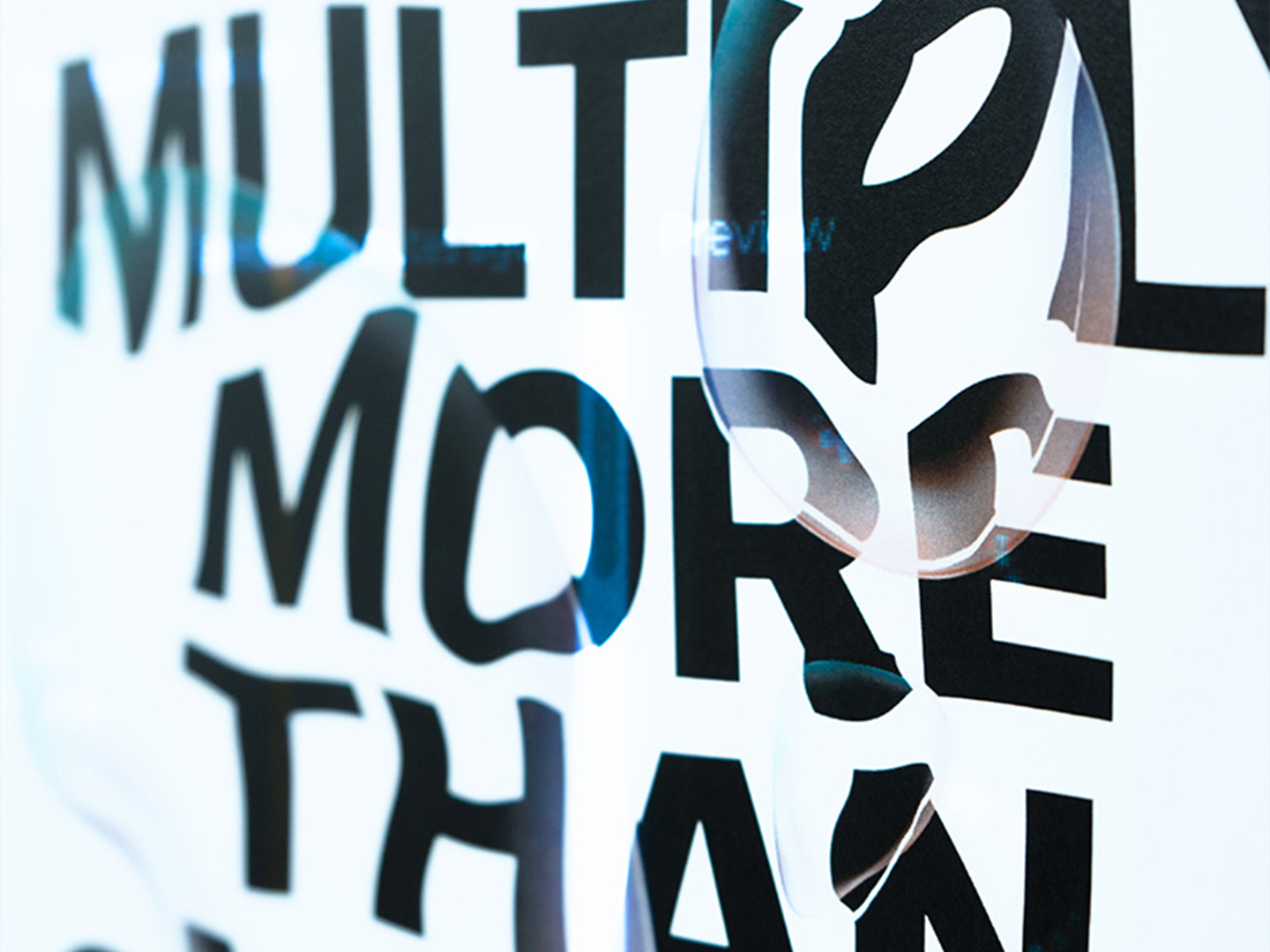
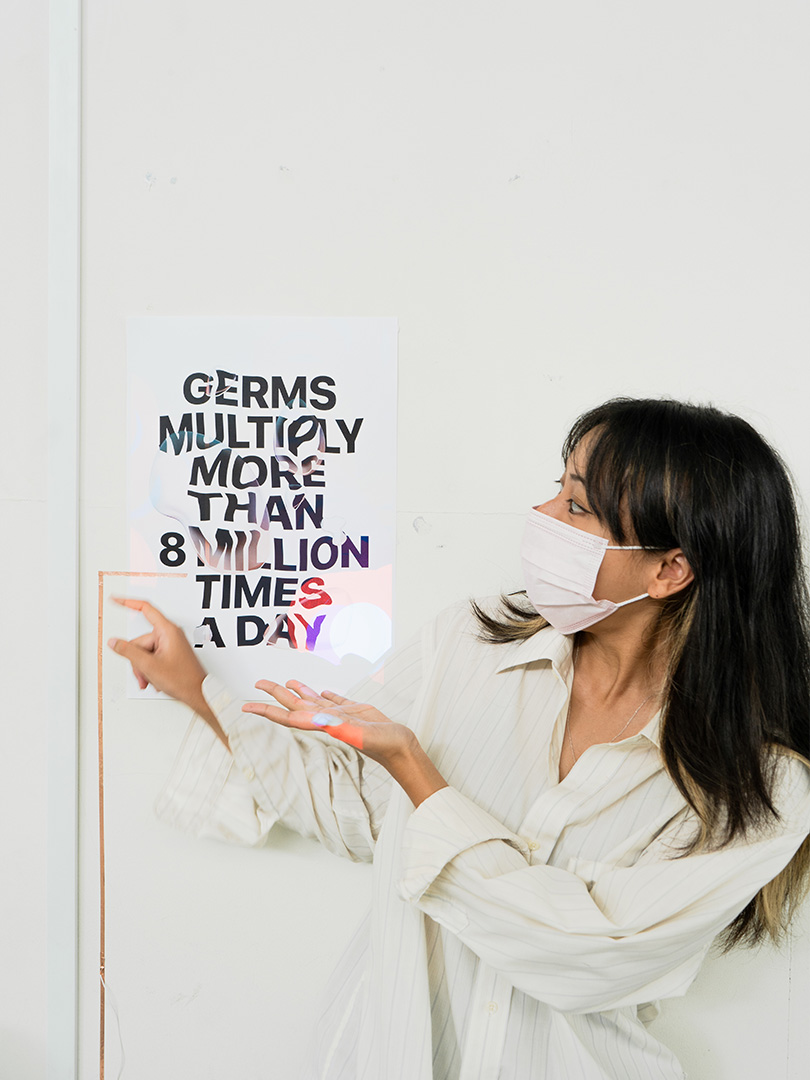
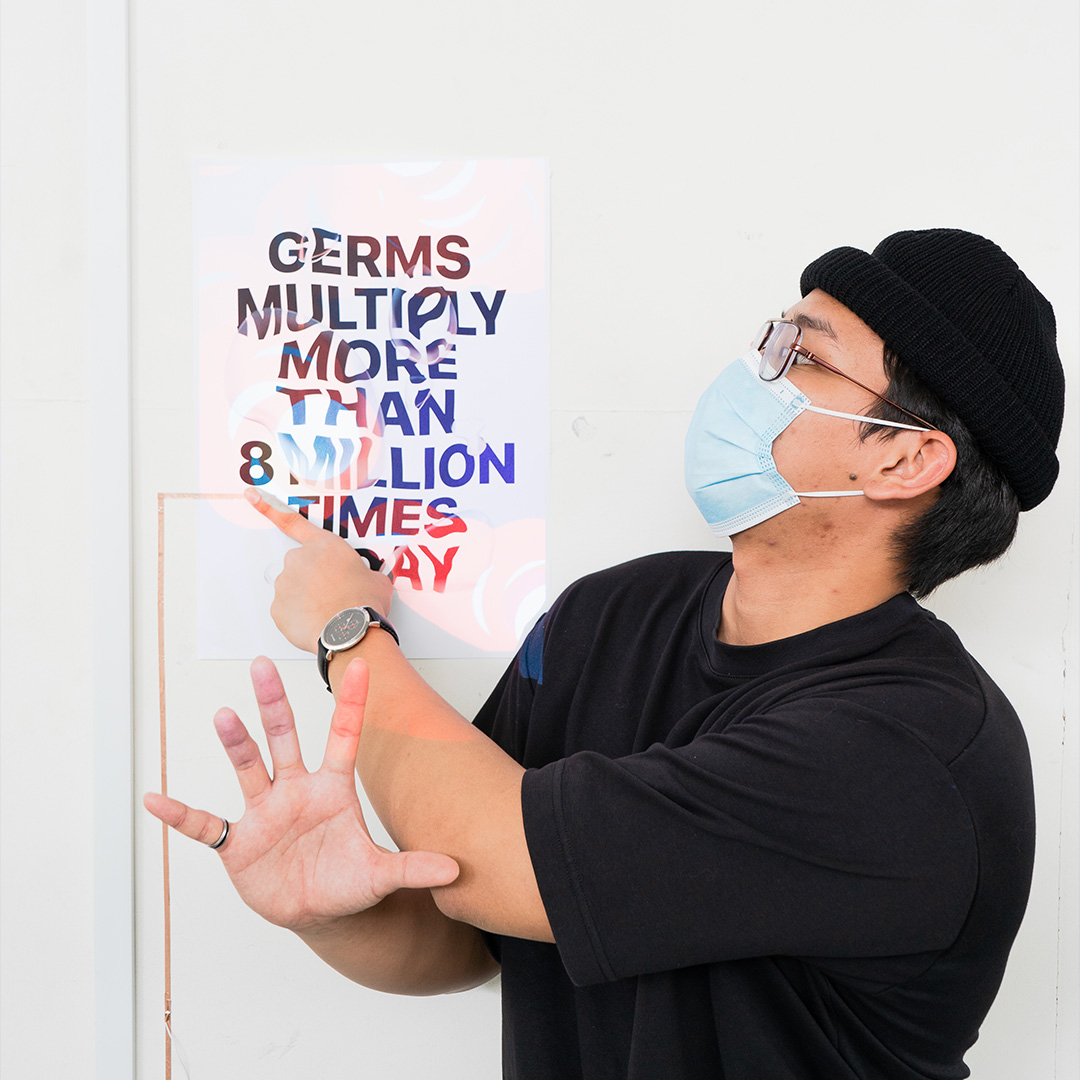
The micro-controller is a translation device for linking physical interactions to digital displays. It helps add a tactile element to the all-too-familiar screen. Given a simple setup of an Arduino board with a micro-resistor, the duo was limited to an input of increasing or decreasing levels. Think ‘squeezing a stress ball’. To represent how easy viruses spread, Puteri recommended the idea of active versus passive germs where the catalyst of change would be the user’s literal hand input. The result was a fun physically interactive typography poster that screens the movement of bacteria based on whether users were touching it or not.
Reflection
Progressing to this piece of tech had us feeling like we needed more art direction than usual. Physical interaction is a pretty novel idea with arguments that ‘we lack them in this screen-age’. But to us, the thing that tied the whole thing together was the concept of highly energetic bacteria due to physical touch. It formed playful interactions with users that came across the poster in ways that we felt would not be possible if we hadn't approached the tech carefully.
Experiment 4
Computing Systems
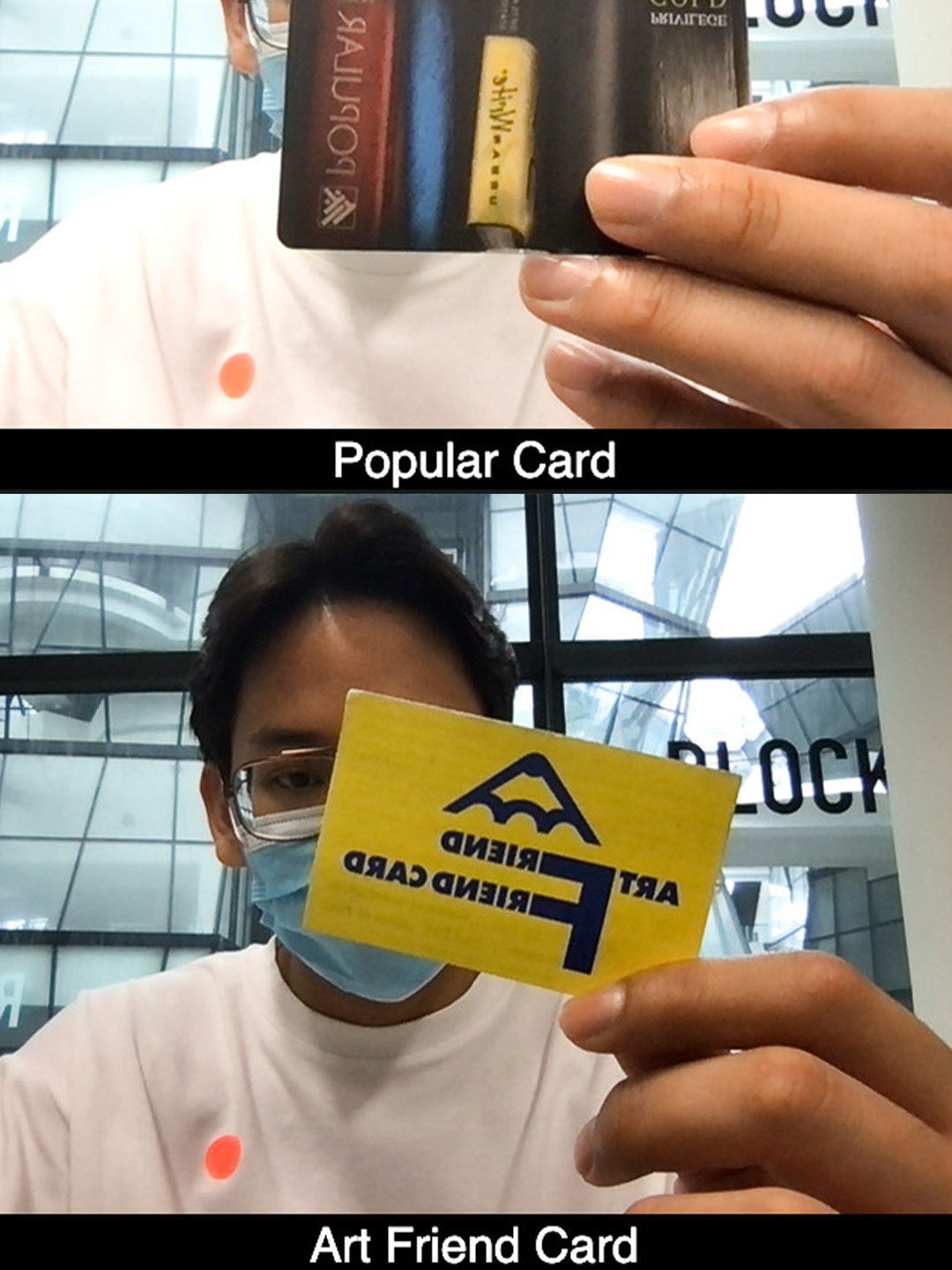
ML5 is a machine learning programme with many use cases. One of which is the ability to process images and assign them a tag, just like how our phones can recognise recurring faces in our photo albums.
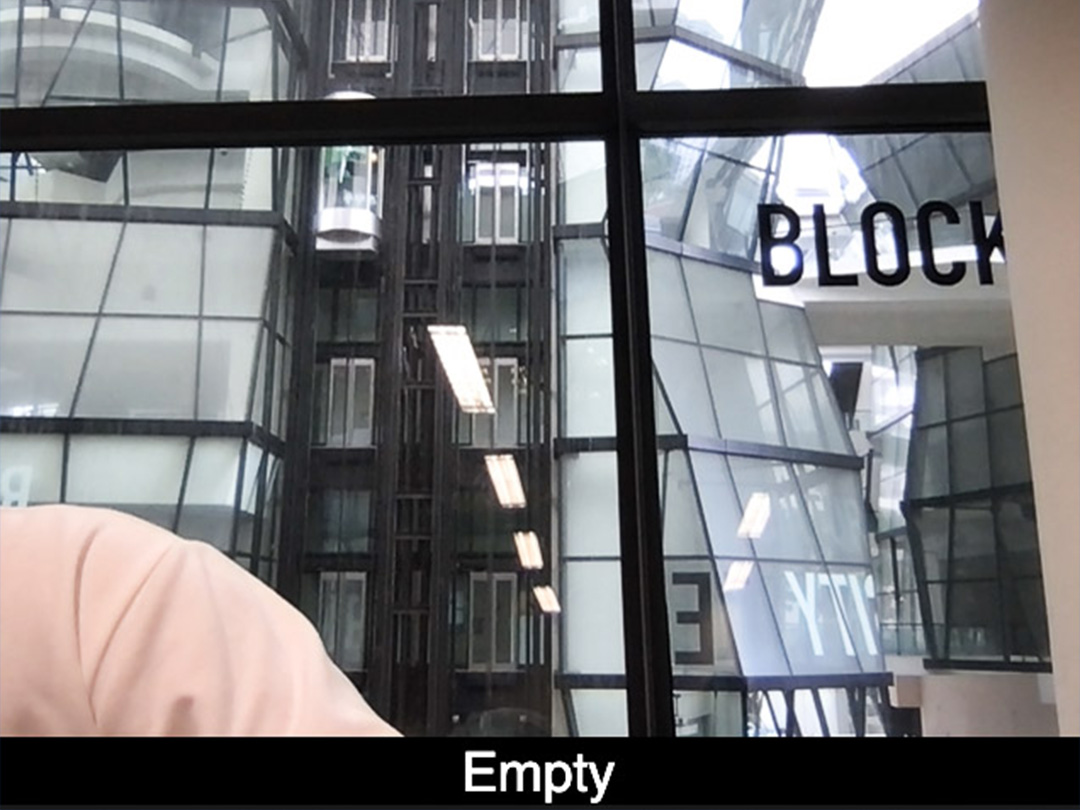
To test its capabilities, the duo taught the programme to distinguish between different cards ranging from name cards to membership cards. This quick experiment proved highly successful as the camera was able to pick up and distinguish between the various cards as well as when no cards were being presented.
Reflection
The programme works by learning combinations of pixels. It picks up nuances and similarities with the images it has learnt and compares them to the video feed. When presented in an ideal situation, the programme identifies items well. However, in regular situations or when the cards are presented against a different or busy background, it struggles. If new backgrounds were placed in the learning programme again, we’re sure it’ll work well again. No wonder Google wants all our photos.
Process
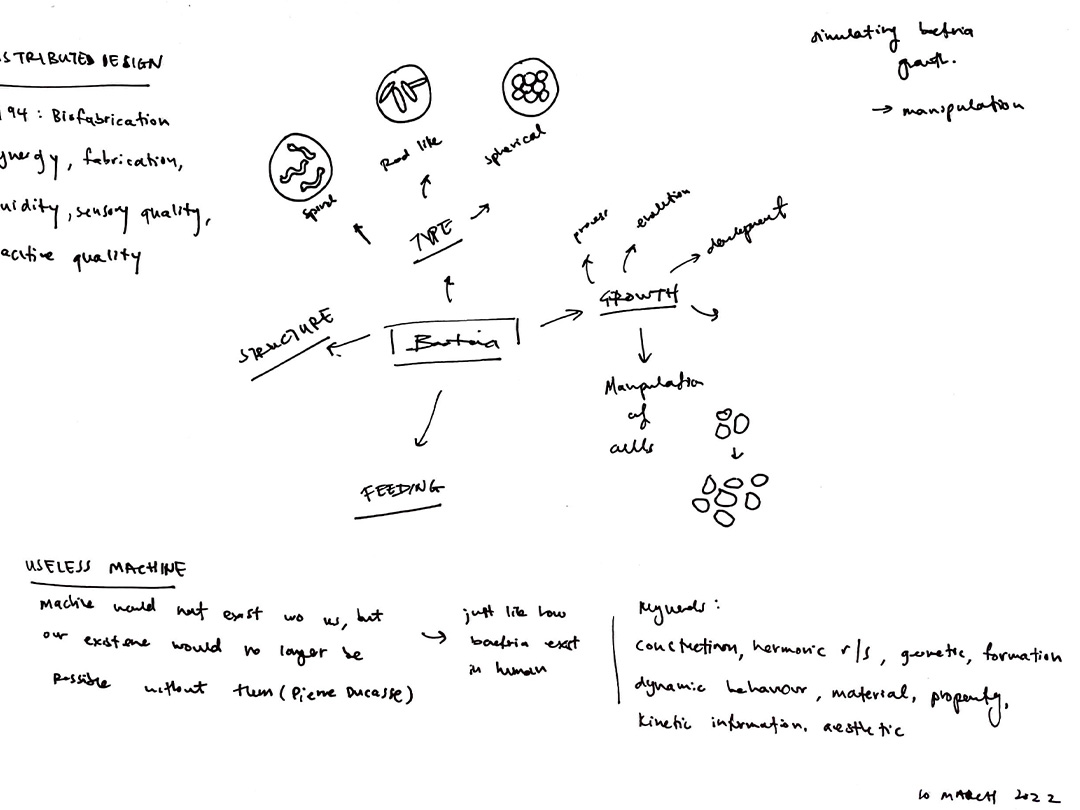
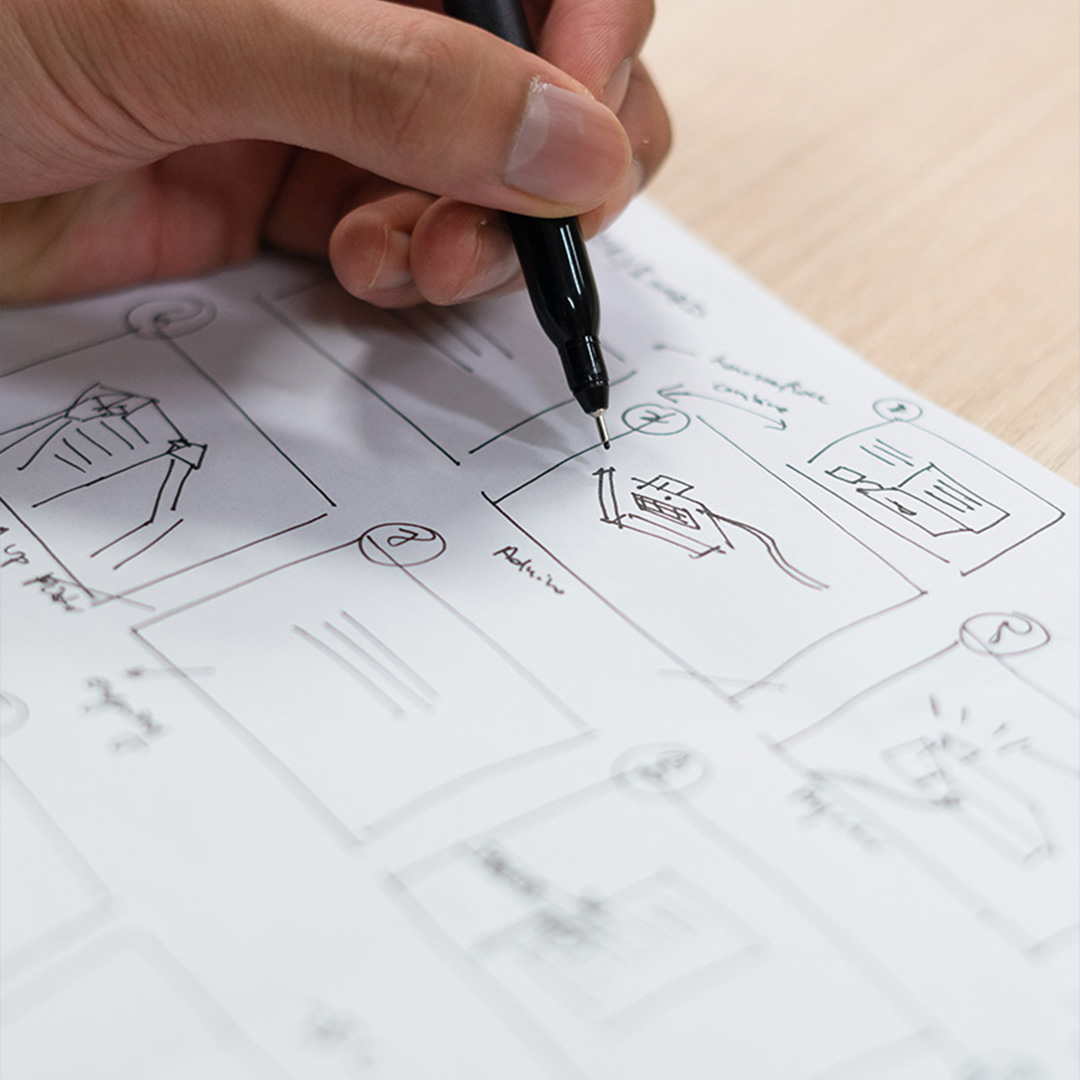
All our ideas began with word maps and expanded on with secondary research. We did this to place our brain clutter onto paper so no stone was left unturned. This assured us that all aspects were considered before diving into design. Even though ‘design’ is an iterative process, the rounds of iteration can be reduced when proper thought is brought into its early stages.
That being said, we were messing with new tech every week which involved learning the ins and outs of the tech and also new materials. For example, the laser cutter involved a lot of smaller iterations to ensure questions like “is the hole big enough for the rod to fit perfectly?" could be answered at the end of the day. We solved problems on the fly as we faced them but we did so methodically. For example, holes of different diameters were designed and cut on spare material to test-fit the rods in a single seating so the overall process moved faster while maintaining minimal wastage. And when code became too difficult to figure out, we reduced our expectations.
As a result of this process, initial sketches and final products almost mirrored one another. At times when a sketch would not work due to limited resources, ideas were mended to fit the available parameters. We feel that disconnecting ourselves from our ideas allowed us to answer the requirements flexibly while still having fun with experiments and that's what matters—having fun!
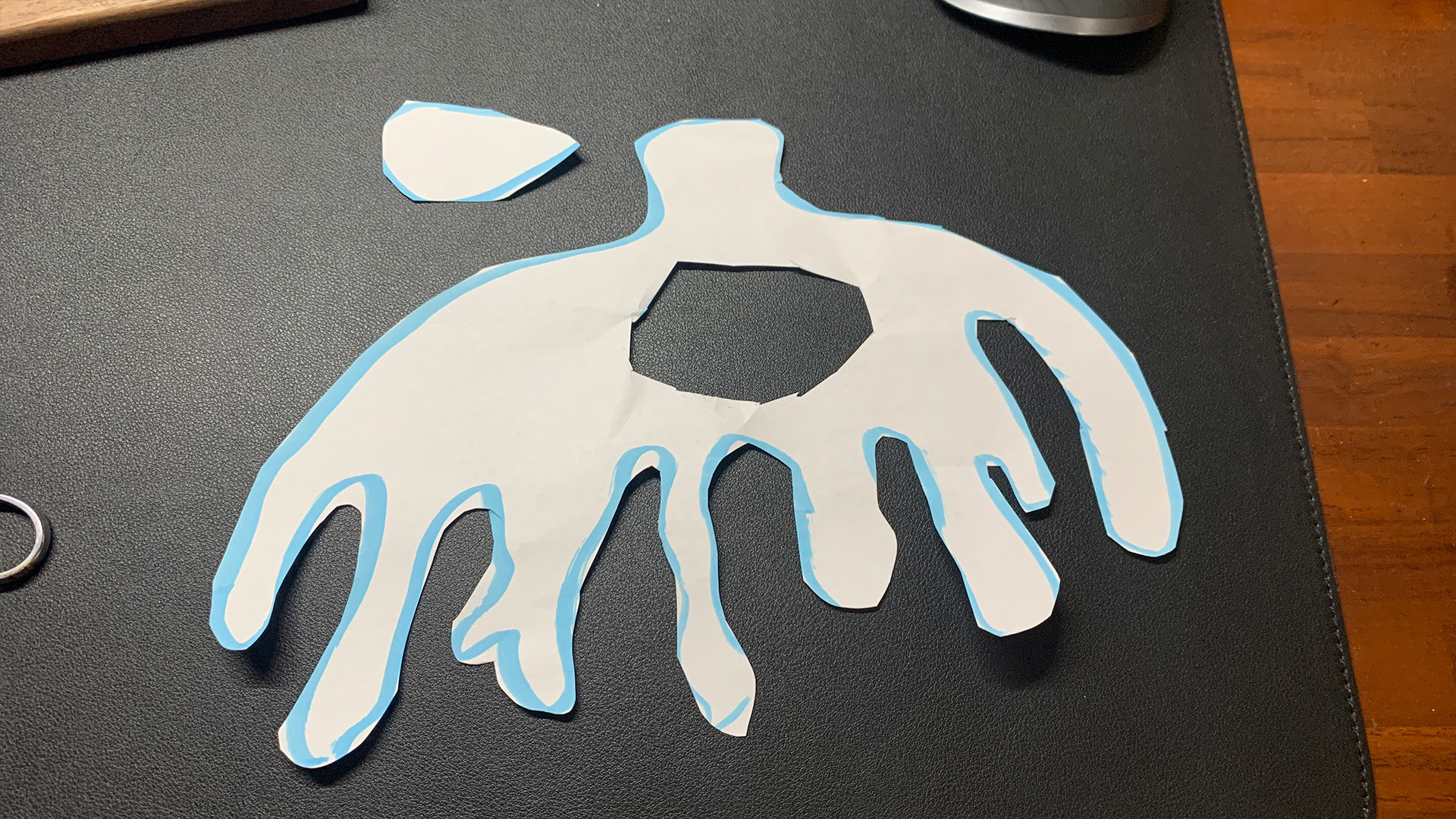
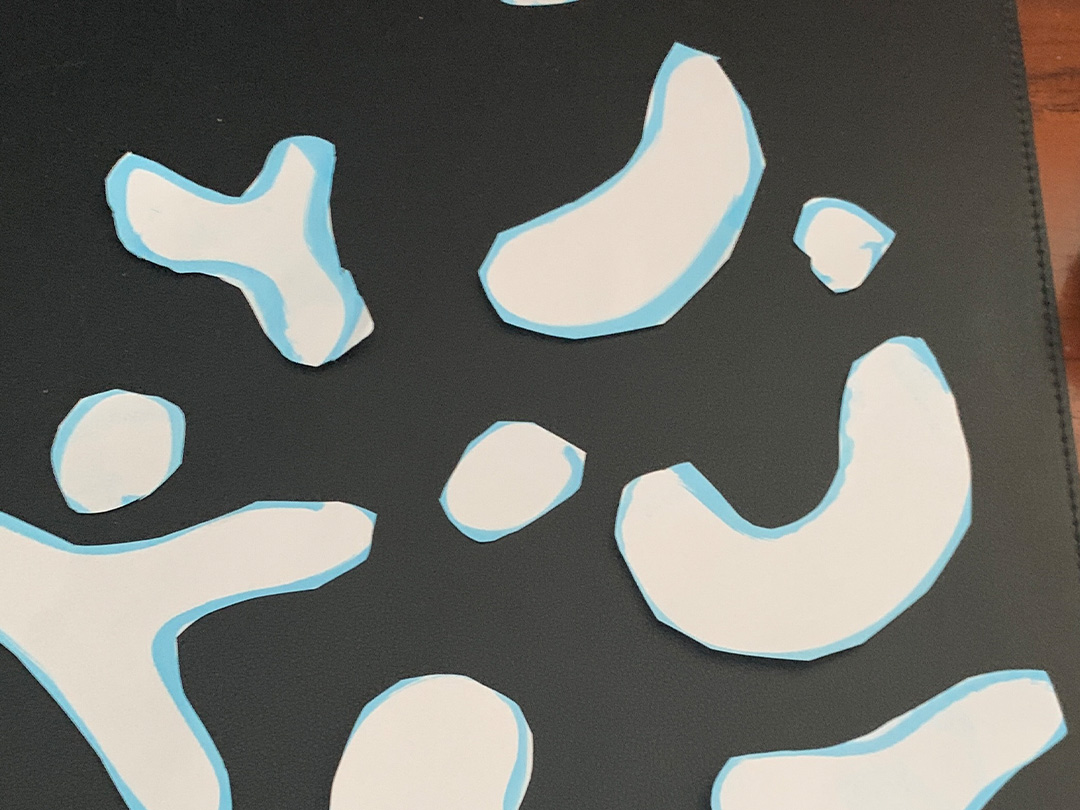
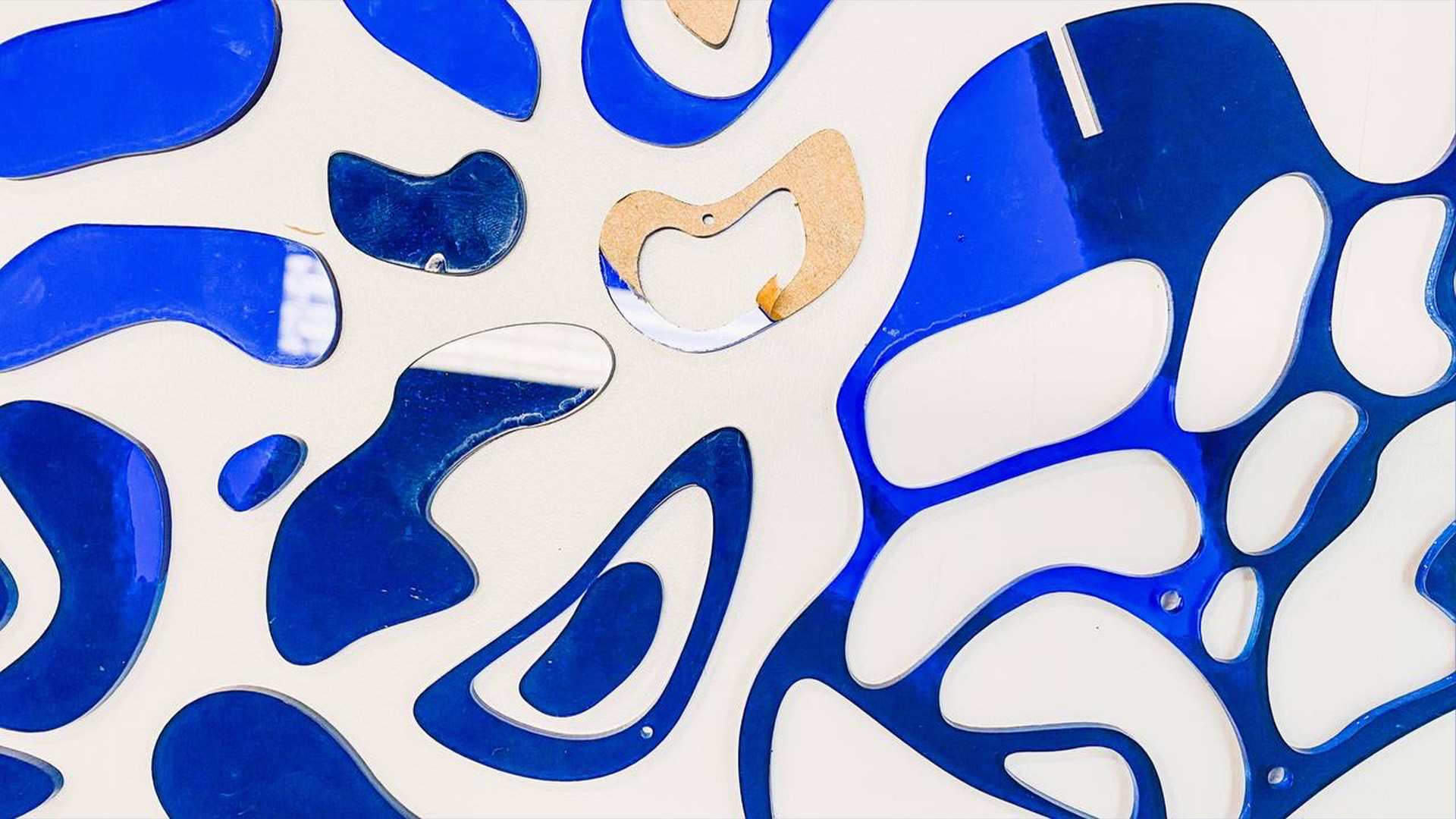
Two fans of germs decide to create lots of blobs in their experiments with tech.
Conclusion
What have we learned over the course of this semester?
Learning with machines involves a great deal of experimentation, often resulting in trial and error. What we intended to achieve in a single session may not have been the case in any way. With machines and technology, there is always room for future improvement through techniques that we did not have time for in a class environment.
What were some of the struggles, challenges and achievements? Although the machines we used were unique and intriguing to us, there have already been used by other designers. This benefited us in collecting data and inspiration for our modifications. The primary challenge we faced was the precision necessary to operate with machinery; even a small variation of 0.3mm makes a big difference on equipment like the laser cutter.
Some final thoughts about designing with machines
One session introductory on a single machine may have been a tad too short to execute and experiment however the past 5 weeks have been nothing but exhilarating, especially being able to see the fruits of our labour.